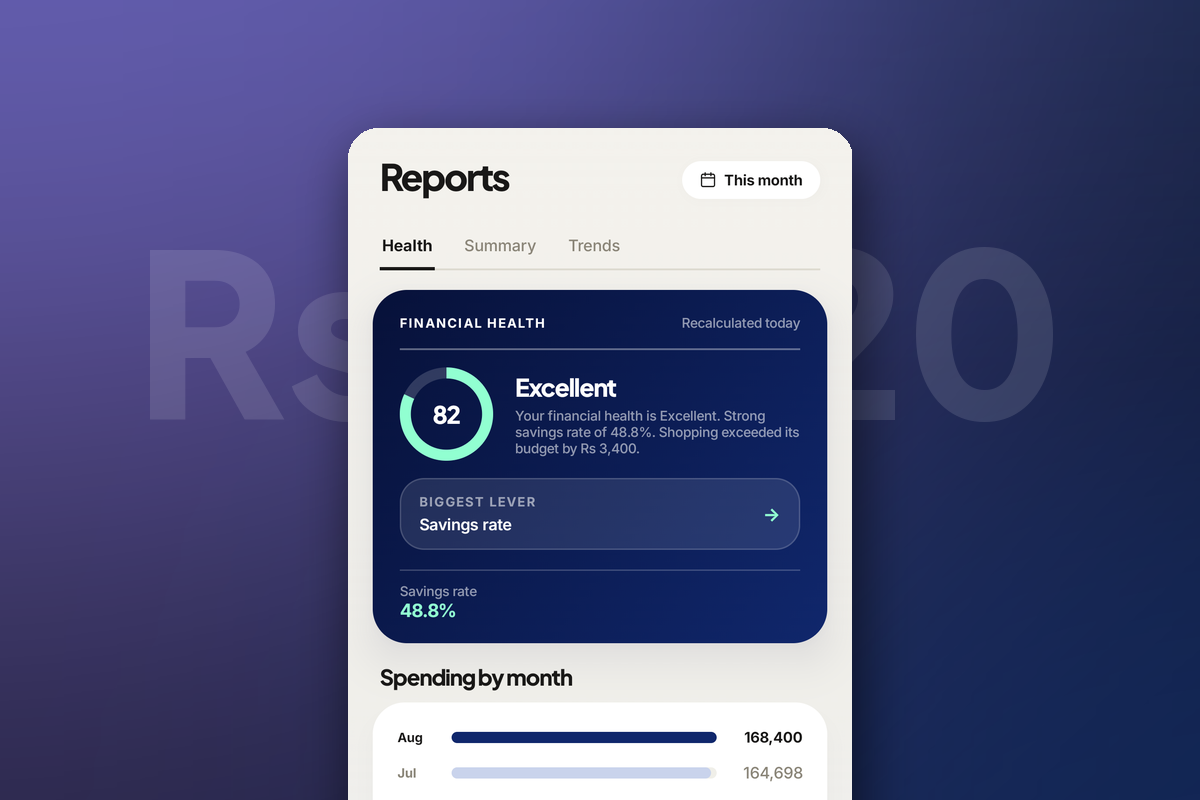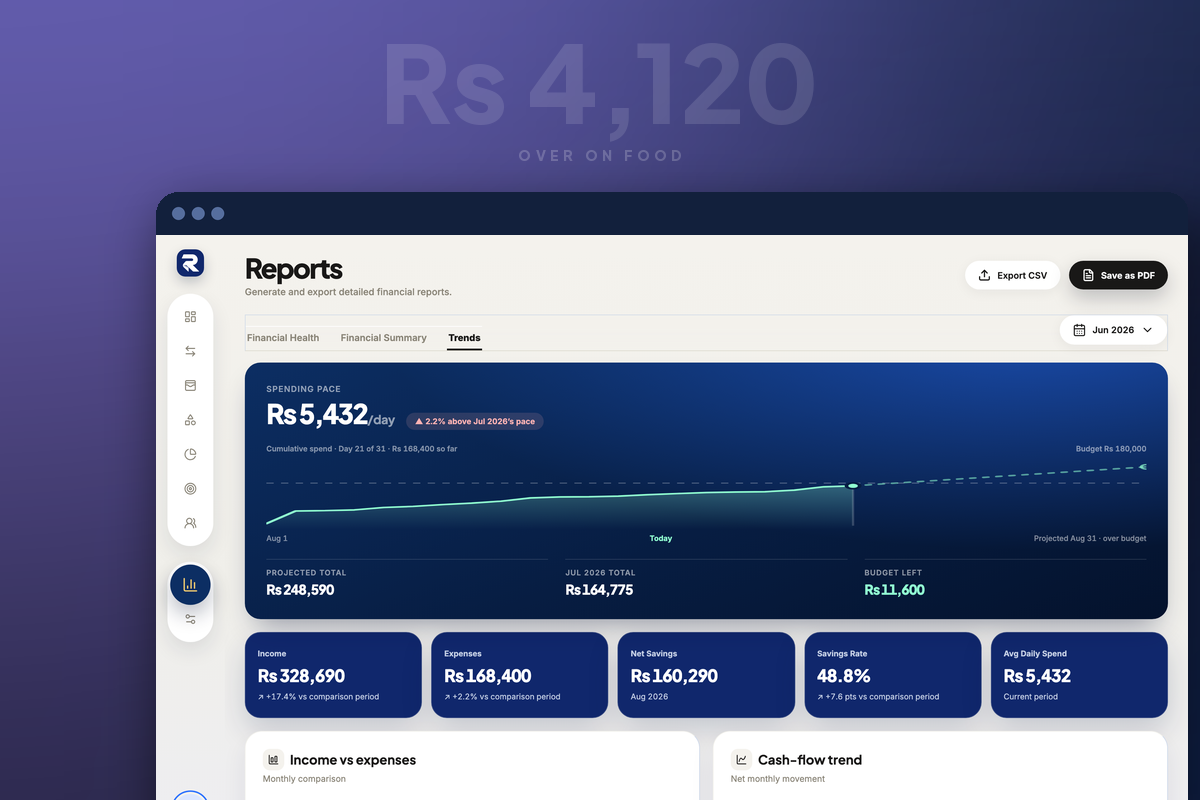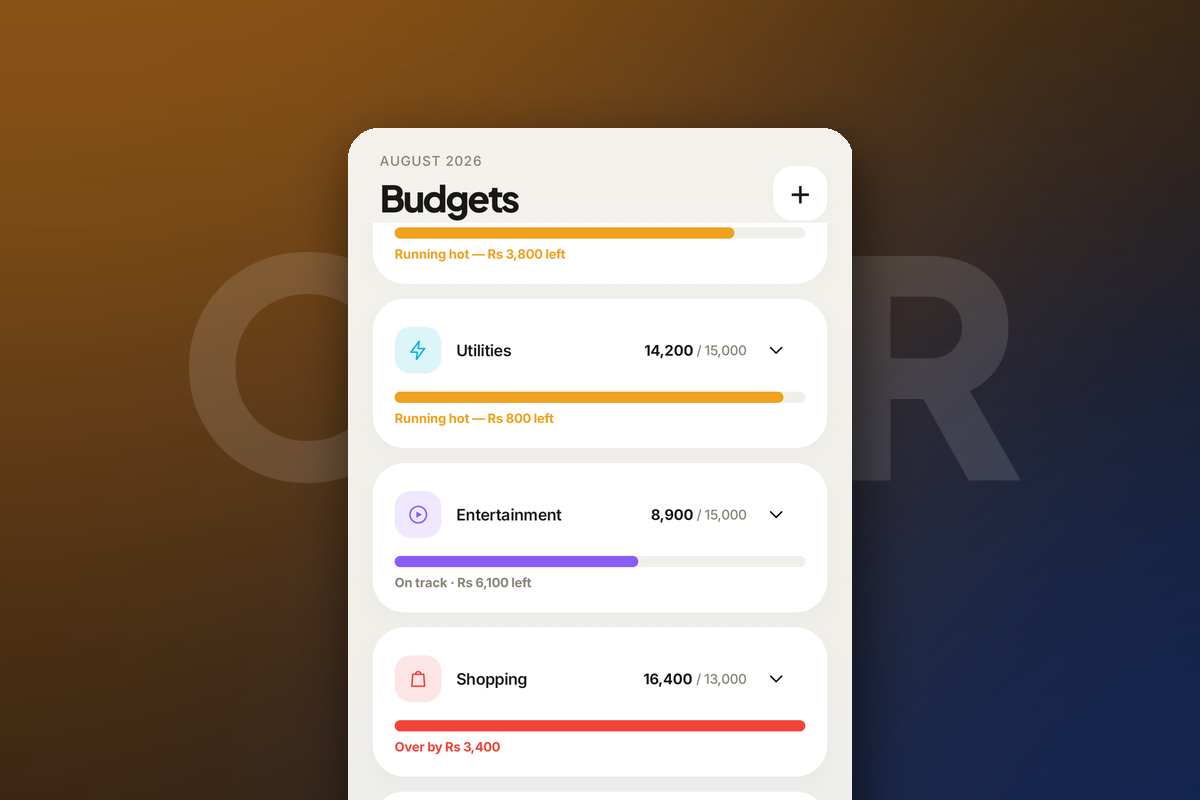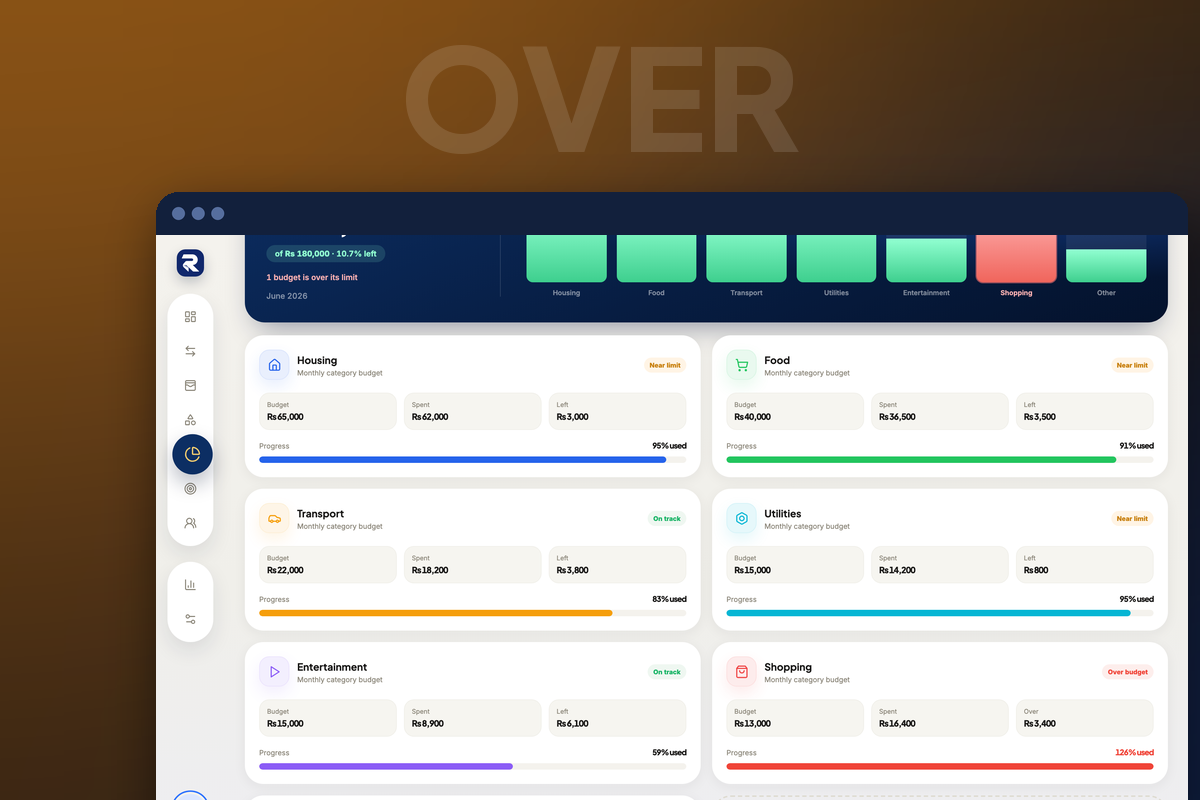
A financial health score compresses several separate facts about your money into one number. That compression is the entire point — and also the entire risk. Used as a prompt to look closer, it is genuinely useful. Used as a grade, it is misleading.
What the score actually is
It is a summary of how your recent money behaviour compares with a set of rules of thumb: are you spending less than you earn, are you keeping to your own plan, and would you survive an unexpected expense. Nothing about it is regulated or standardised — every app calculates it differently.
What goes into the number
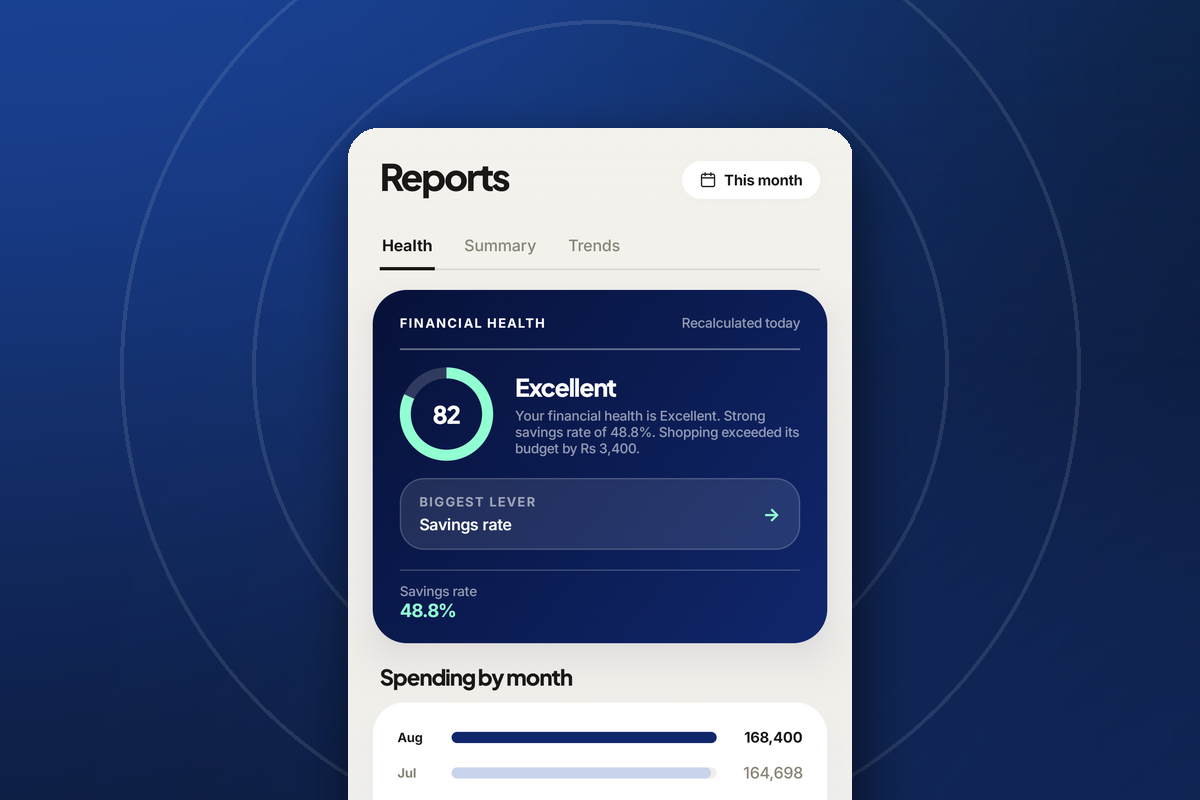
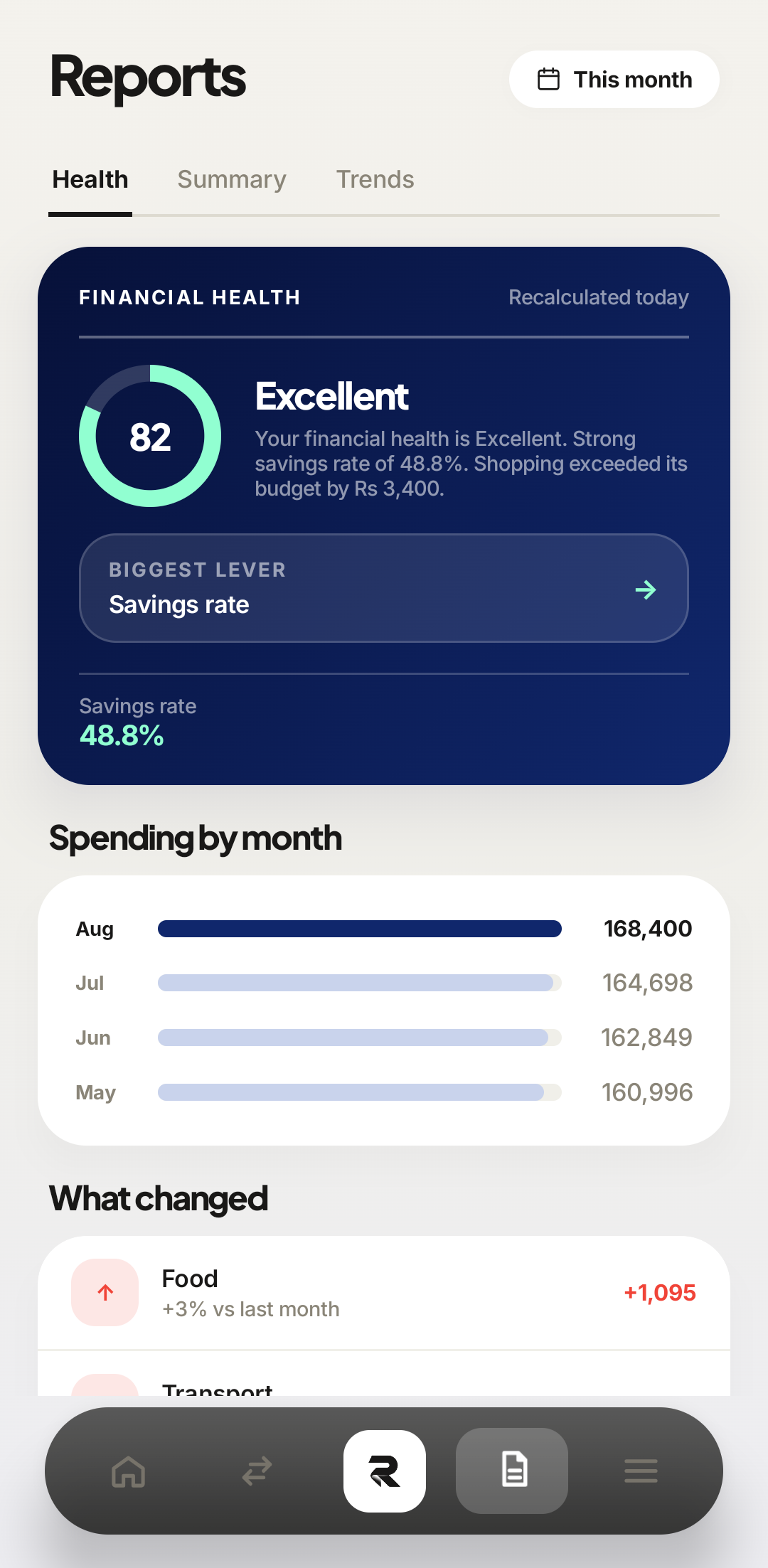 12Biggest lever
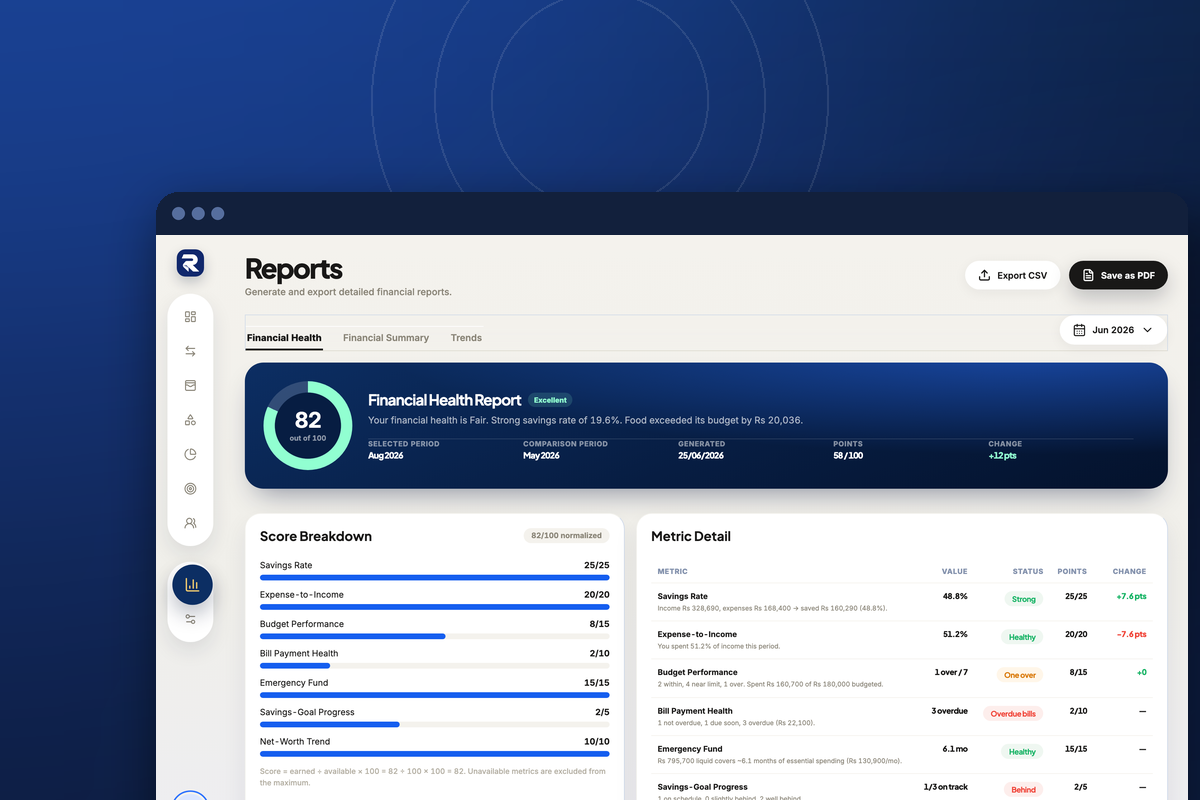
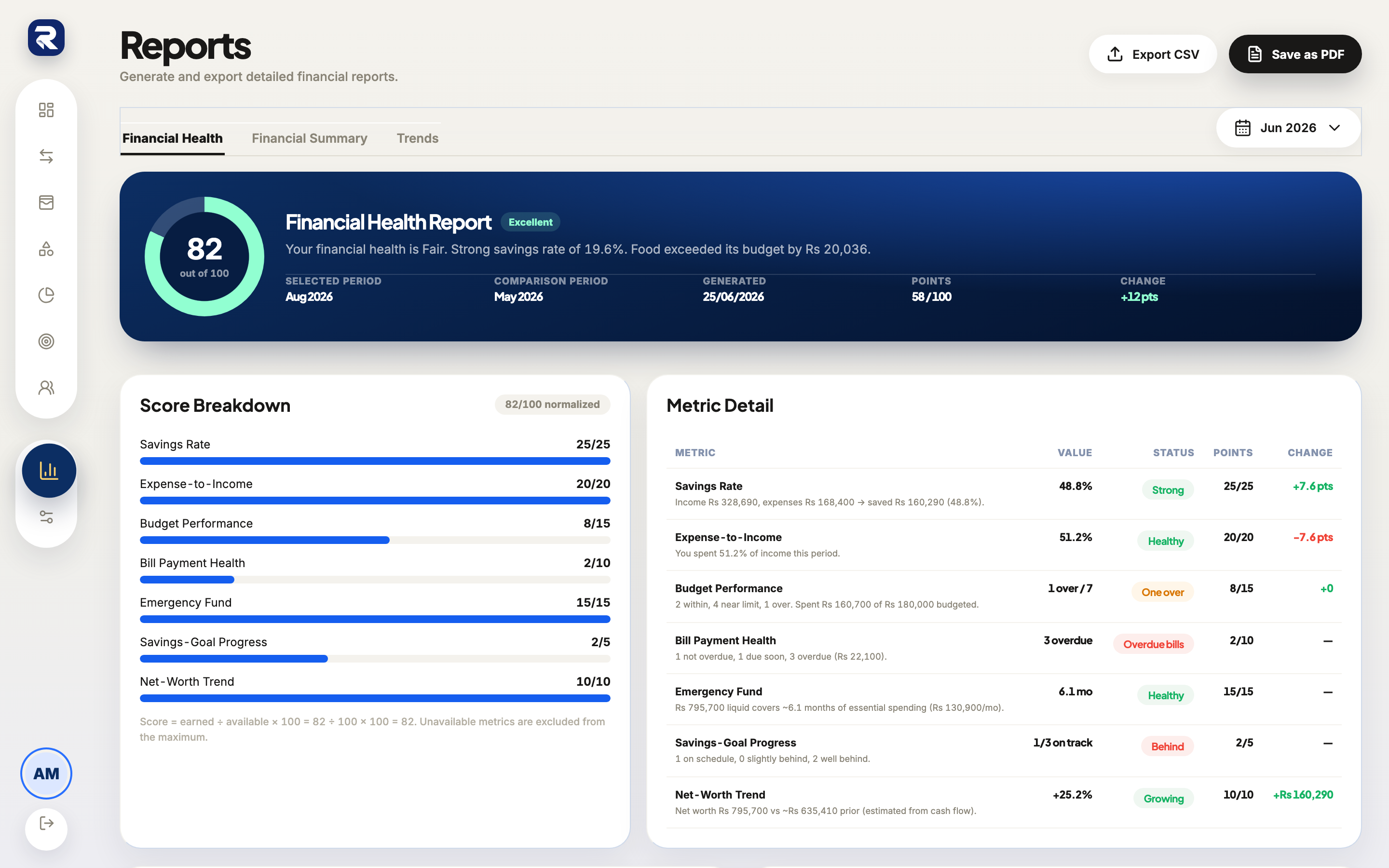 1Score breakdown2Metric detail
Most scores, Rakama’s included, are built from some combination of:
- Savings rate — what proportion of income you did not spend.
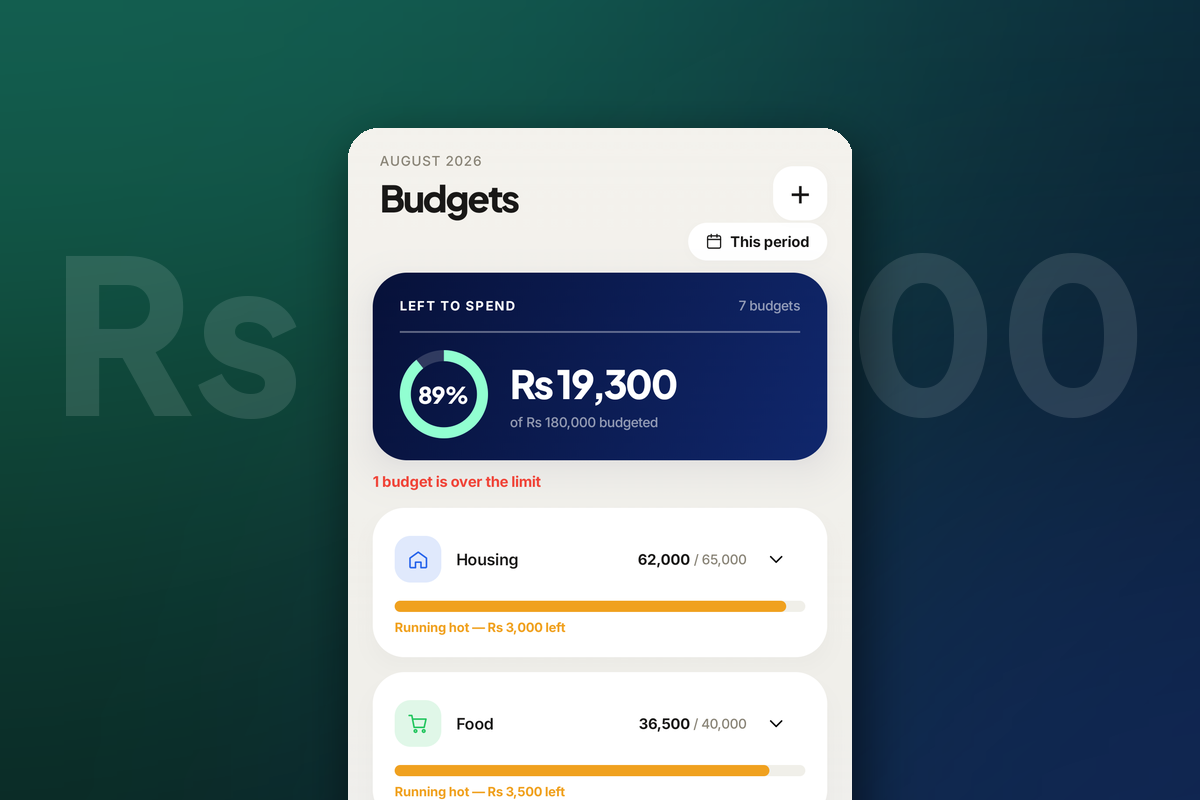
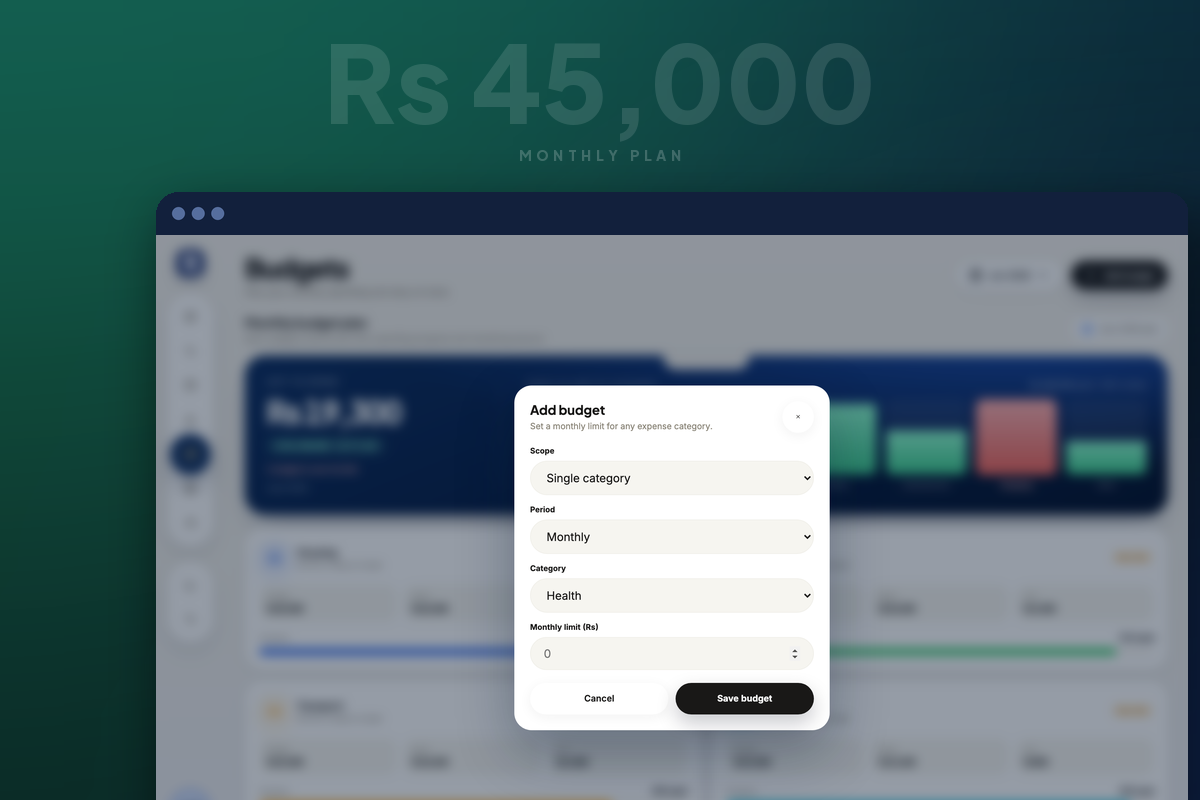
- Budget adherence — how closely actual spending tracked your plan.
- Budget usage — how much of the plan is consumed, and how early.
- Emergency cover — how many months of essentials your balance would carry.
- Trend — whether the picture is improving or deteriorating.
Why the breakdown matters more than the total
Two people can score 70 for opposite reasons. One saves aggressively but blows through every budget. The other never overspends but saves almost nothing. Same number, completely different advice — which is why any score worth looking at names its biggest lever rather than only its total.
How to actually use it
Treat the score as a smoke alarm, not a report card. It is good at telling you something changed, and bad at telling you what to do about it. The useful sequence is short: notice the move, open the component that caused it, then read the underlying transactions.
Check it monthly, not daily. Scores computed on a partial month swing wildly for boring reasons — a salary lands and the savings rate leaps; rent goes out and it collapses. Neither movement means anything on the 3rd.
Where a single score misleads you
Being honest about this matters more than defending the metric, so: there are real situations where the number is simply wrong about your life.
- It cannot see intent. A deliberate, saved-for large purchase reads exactly like losing control.
- It does not know about debt held elsewhere. High-interest debt outside the app is invisible to it.
- It rewards consistency, which penalises irregular and freelance income unfairly.
- It ignores assets it cannot see — property, gold, investments held elsewhere.
- A very high savings rate can reflect an unsustainable month rather than a healthy one.
None of that makes the score useless. It makes it one instrument on a dashboard. The number that moved is worth thirty seconds of attention; the number itself is not worth any anxiety.
Frequently asked questions
Is a financial health score the same as a credit score?
No. A credit score is calculated by a bureau from your borrowing history and is used by lenders. A financial health score is calculated inside your own app from your own data, and nobody else sees it.
What is a good financial health score?
The direction matters more than the level. A score climbing from 55 to 70 over six months describes a healthier situation than a flat 75 that has not moved in a year.
What is a good savings rate?
Around 20% of income is a widely used benchmark, but the honest answer depends on your income and cost of living. Any consistent positive rate beats an ambitious one you abandon.
Does a bad score mean I am bad with money?
No. The score reflects a period, not a person, and it cannot see context — a deliberate month of heavy spending on a planned purchase looks identical to losing control.
Make your money easier to understand.
Track expenses, plan budgets, and keep your goals in one clear view with Rakama.
Try Rakama free ↗