
Rs 210,000 in a month where you usually see Rs 80,000. It feels like winning, and the feeling is the problem: money that arrives unexpectedly gets treated as a category of its own, outside the budget, subject to different rules. It is not. It is next February’s rent, arriving early.
The two traps
Trap one: lifestyle inflation, one month at a time
The surplus does not get spent on anything memorable. It gets absorbed — a slightly better restaurant, a bigger grocery trip, a delivery instead of a walk, an upgrade that seemed reasonable given the month. By the end of it, Rs 130,000 of surplus has left no trace except a category total you will not examine.
This is the common failure, and it is invisible while it happens. Nothing about it feels like overspending, because every individual decision was affordable at the time.
Trap two: saving all of it
The overcorrection. Sweep the entire surplus into savings, live the good month exactly like the bad one, feel virtuous. This works for about two months and then produces the reasonable question: what is any of this for?
The order of operations
Everything above your income floor is surplus. Work through it in this order, on the day the money lands, before it has time to be absorbed.
| # | Where it goes | Why here |
|---|---|---|
| 1 | Tax set-aside | It was never yours; a big month generates a big liability |
| 2 | Refill the buffer to target | This is what pays for the next bad month |
| 3 | Replace what the last bad month consumed | Restores the position you started from |
| 4 | Known upcoming costs | Fees, insurance, a renewal you can see coming |
| 5 | A deliberate share to spend | Sustainability — see below |
| 6 | Long-term savings or investment | Only from a genuinely full buffer |
Tax goes first because it is the least negotiable and the most commonly forgotten. In a month that doubles your income, the tax on it roughly doubles too, and it will be due in a quarter when you may well be in the low part of your cycle.
The part you are allowed to spend
Decide the share before you know the amount. A quarter of the surplus is a good default — large enough that a strong month is visibly different from a weak one, small enough that it does not undo the point.
Then spend it on something you can point at. A specific thing, bought deliberately, that you will still remember in six months. The failure mode of an undirected allowance is exactly the absorption described above; the fix is to make the spending an event rather than a background rate.
- Decide the percentage in a normal month, not in the good one.
- Move it out of the surplus immediately, so the rest is not sitting in your current account looking spendable.
- Spend it on one or two identifiable things rather than raising your baseline.
Doing it in Rakama
Mechanically this is four transfers on the day the money arrives, and the reason to do them immediately is that a current account holding a large balance is the most reliable predictor of a large balance disappearing.
- A Savings account named for the buffer.
- A Savings account named for tax, if nobody withholds yours.
- Transfers into both — Rakama links the legs, so none of it appears as spending or income.
- What is left in the current account is what the month is actually for.
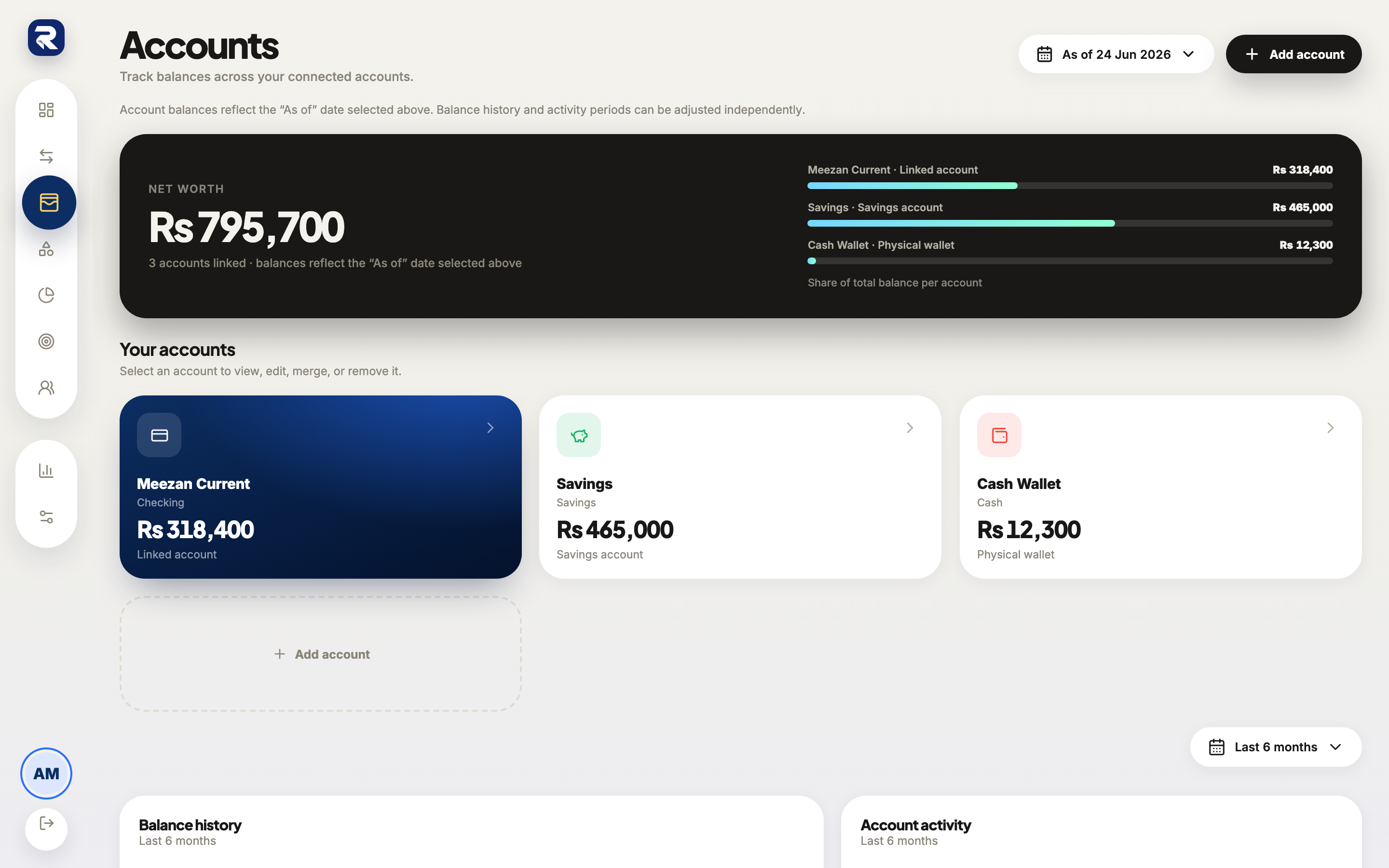
There is no automation for any of this. Rakama has no rules engine, no automatic split of incoming money, and nothing that recognises a month as unusually good. The four transfers are yours to make, and doing them within a day of the money arriving is the entire discipline the method requires.
Frequently asked questions
What should I do with a month where I earn much more than usual?
Refill the buffer first, set aside tax second, replace whatever the last bad month consumed third, and only then allocate a deliberate share to spending.
Should I save all of a good month?
No. A method that turns every strong month into austerity does not survive contact with real life. Allocate a fixed share — a quarter of the surplus is a workable default — to actual spending.
Does a good month mean I can raise my budget?
Not on its own. Budgets are sized against your income floor, and one strong month does not move the floor.
Where should surplus money sit?
In a separate savings account, moved by transfer so it stays out of your spending figures and out of easy reach.
Make your money easier to understand.
Track expenses, plan budgets, and keep your goals in one clear view with Rakama.
Try Rakama free ↗