Sharing a house is cheap. Sharing money is expensive — not in rupees, but in the low-grade friction of working out who owes what, then asking for it. The households that manage this well are not more generous than yours. They just decided the rules once, in advance, and stopped renegotiating every month.
Decide the basis before you need it
Almost every roommate argument is really a disagreement about a rule that was never agreed. Settle these four before the first bill arrives: how rent is split, how utilities are split, who holds each account, and when money is due.
| Cost | Usual fair basis | Why |
|---|---|---|
| Rent | Room size or amenity | Rooms are not interchangeable products |
| Internet | Equal | Everyone has the same access regardless of use |
| Electricity | Base equal, cooling by usage | Air conditioning dominates the summer bill |
| Gas / water | Equal | Usage differences are small and not worth metering |
| Groceries (shared) | Equal, with opt-outs | Works only if genuinely shared |
| Cleaning / repairs | Equal | Benefit is shared by everyone in the house |
When the rooms are not equal
Splitting rent equally when one room is twice the size and has its own bathroom is the single most common source of quiet resentment in shared houses. A workable approach is to split by floor area, then adjust for the obvious amenities.
For a Rs 120,000 house with three bedrooms — a large room with attached bath, a standard room, and a small room — something like Rs 48,000 / Rs 40,000 / Rs 32,000 reflects reality better than Rs 40,000 each. The exact numbers matter less than the fact that everyone agreed to the reasoning.
What about shared spaces?
Do not try to price the lounge and kitchen separately. Everyone uses them, the accounting gets silly quickly, and it is already baked into treating rent as one pot.
Handling bills that change every month
Rent is easy because it is fixed. Utilities are where systems break down, because the number is different every time and someone has to recalculate it.
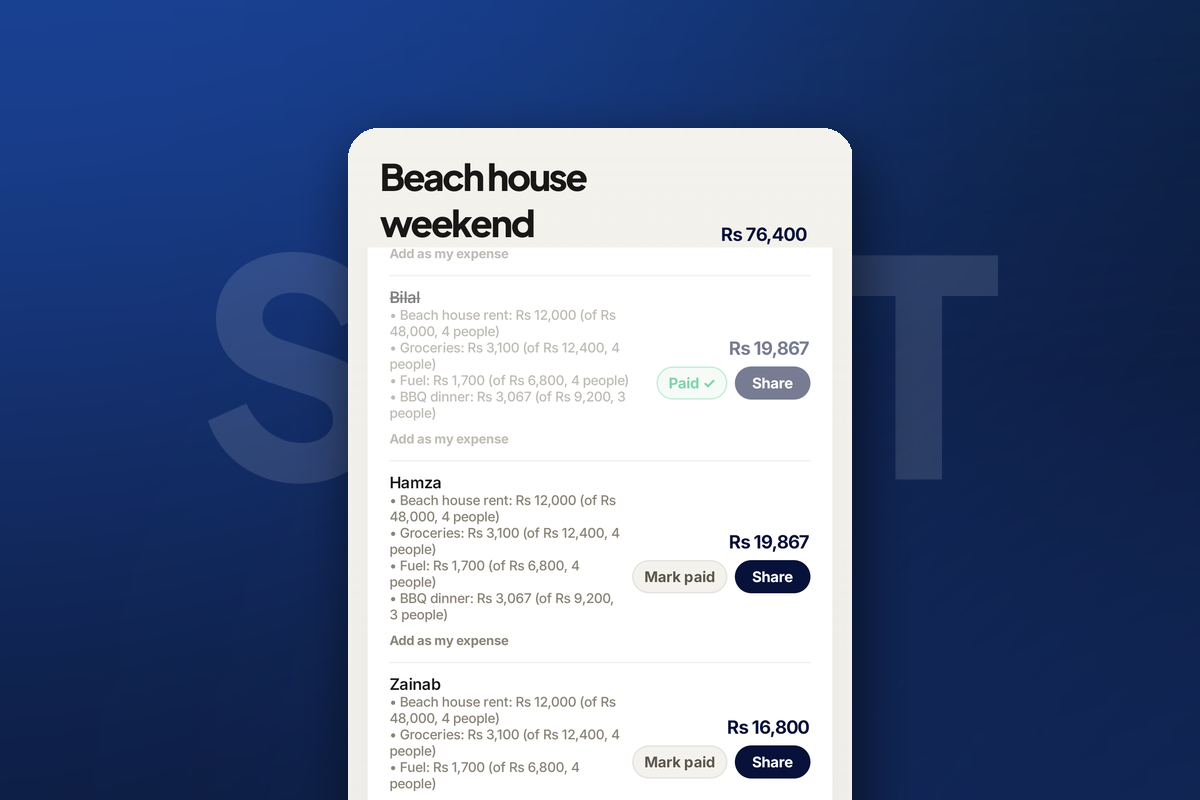
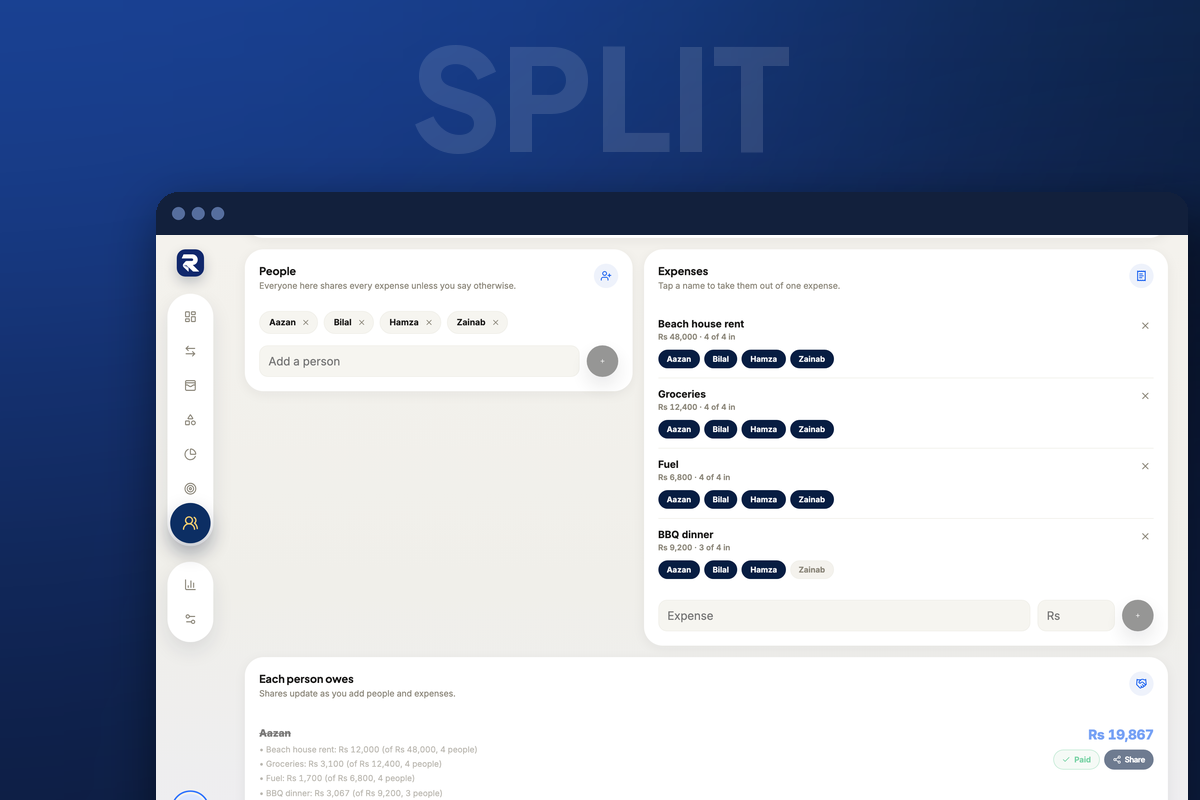
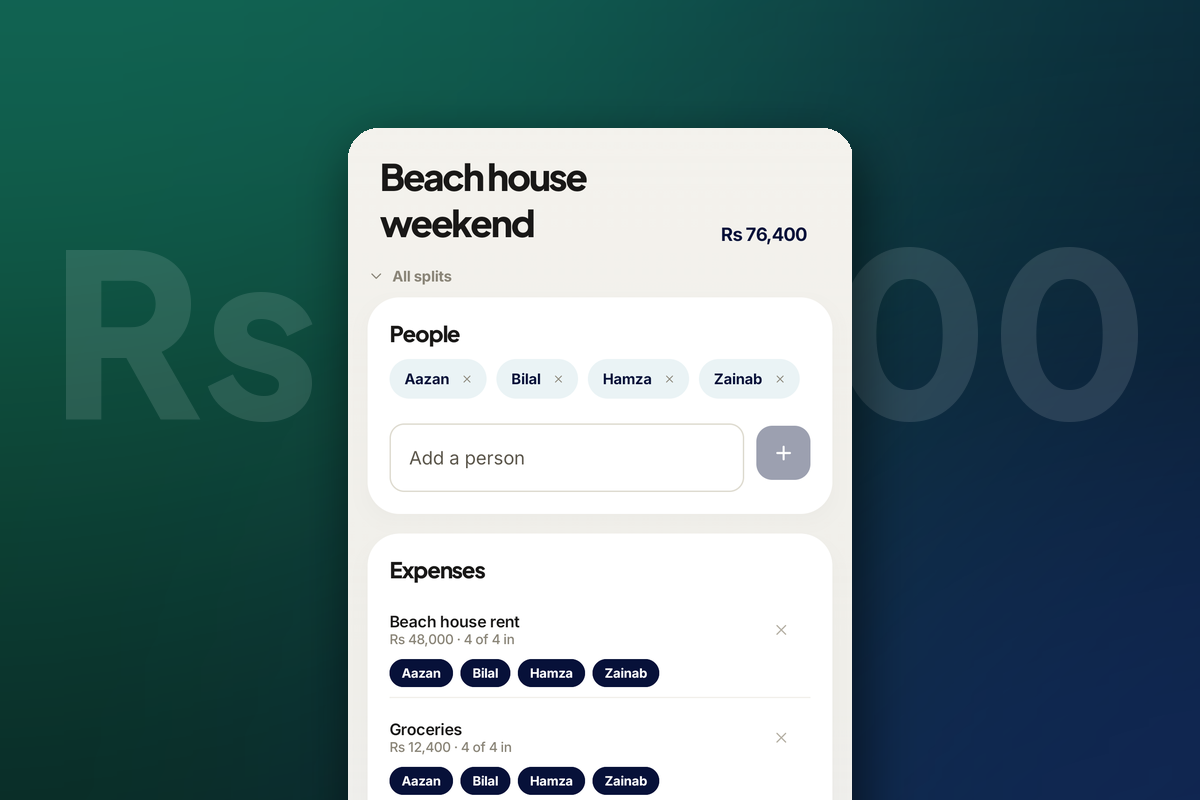
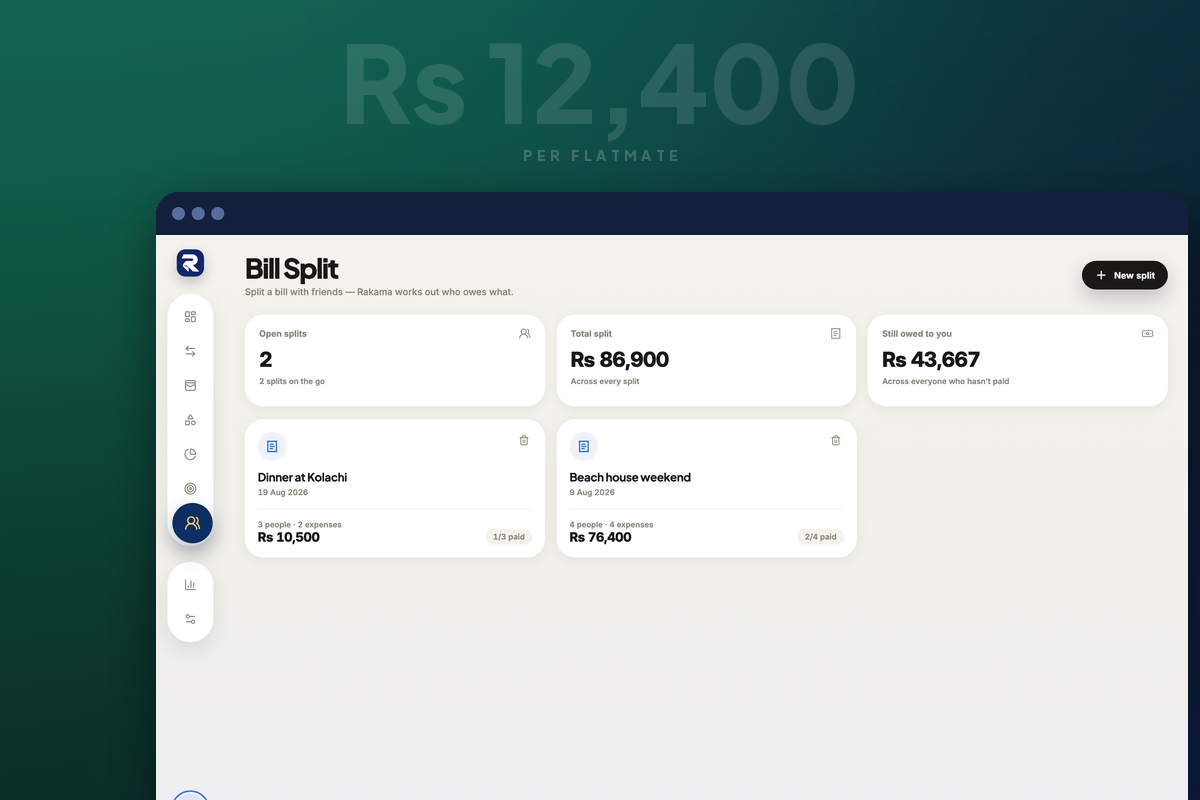
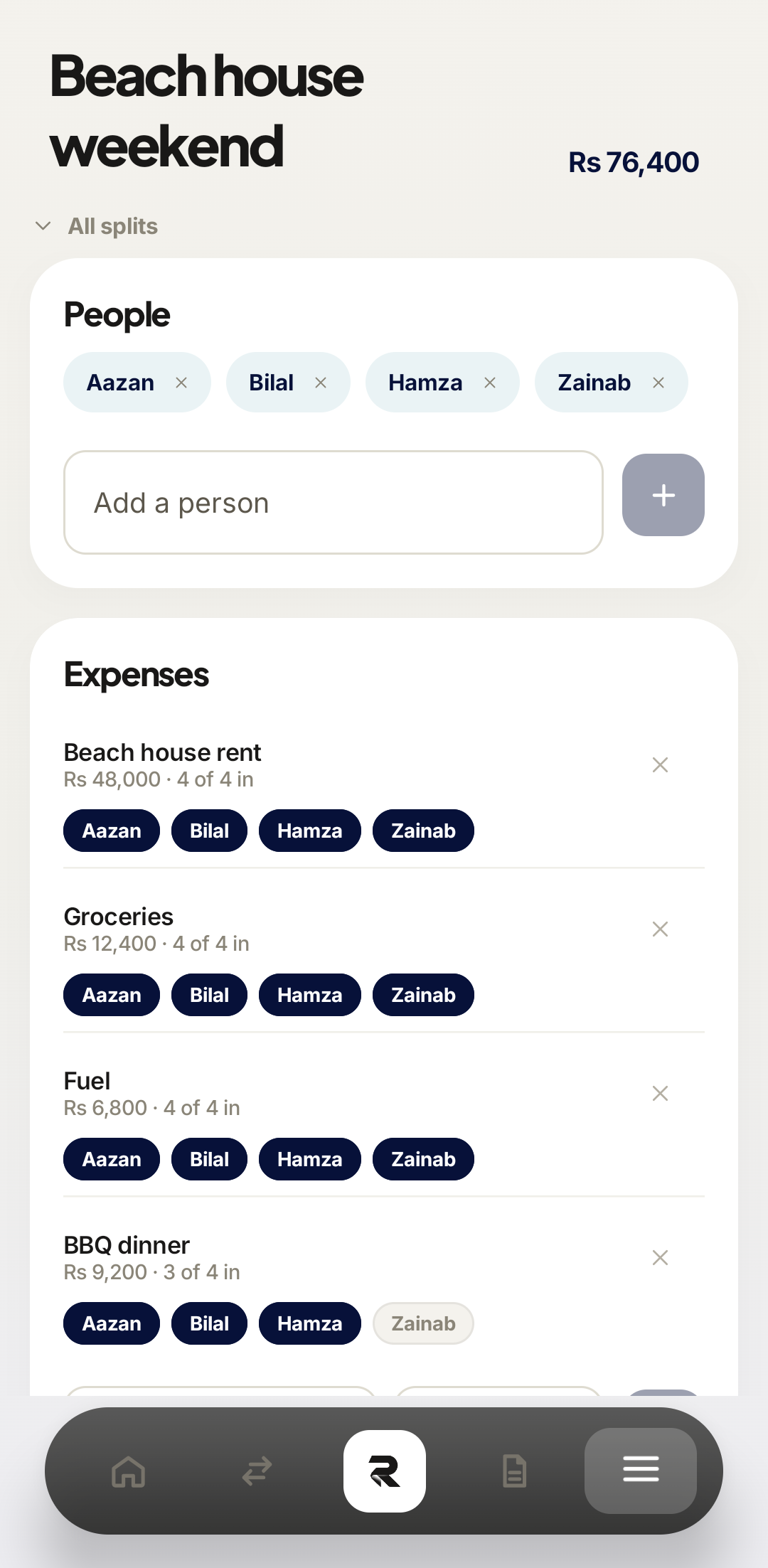
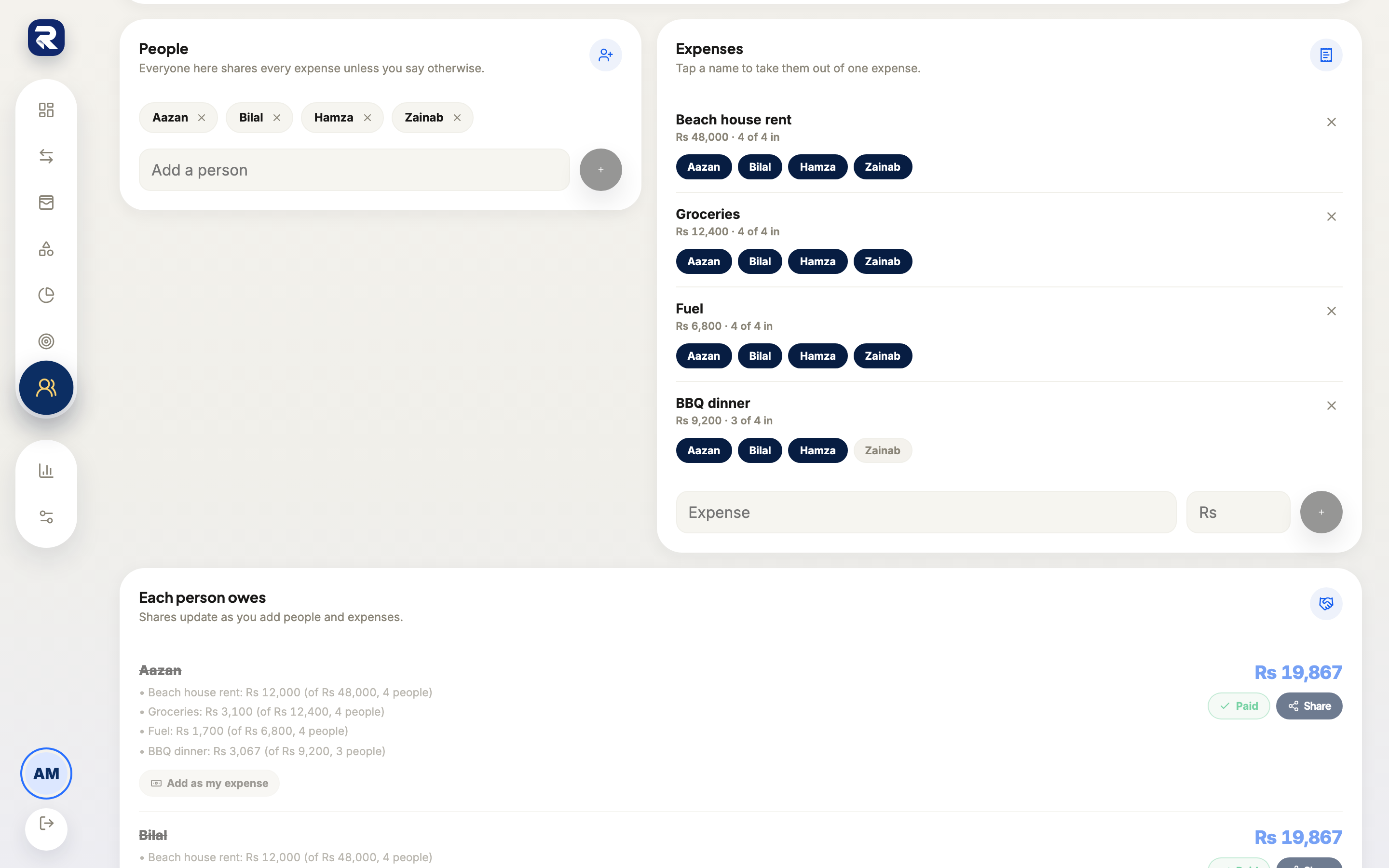
This is exactly the shape of problem a bill splitter solves. Add the housemates once, add each bill as it arrives, and opt out anyone the charge does not apply to — the person who was away for three weeks, or the one room without a cooling unit.
 1Not in2
 1Add a person2Not in
Because opt-outs are per expense rather than per person, one housemate being away for the month does not require rebuilding the whole split. You mark them out of the items that did not apply and everything else recalculates.
Running it every month without chasing
The chasing is the worst part, and it is almost always a visibility problem rather than a willingness problem. People pay late because they do not know the number yet, or they knew it and forgot.
 1Share2Copy all
 1Still owed2
A monthly rhythm that works in practice:
- Bills land — add each one to the split the day it arrives, not at month end.
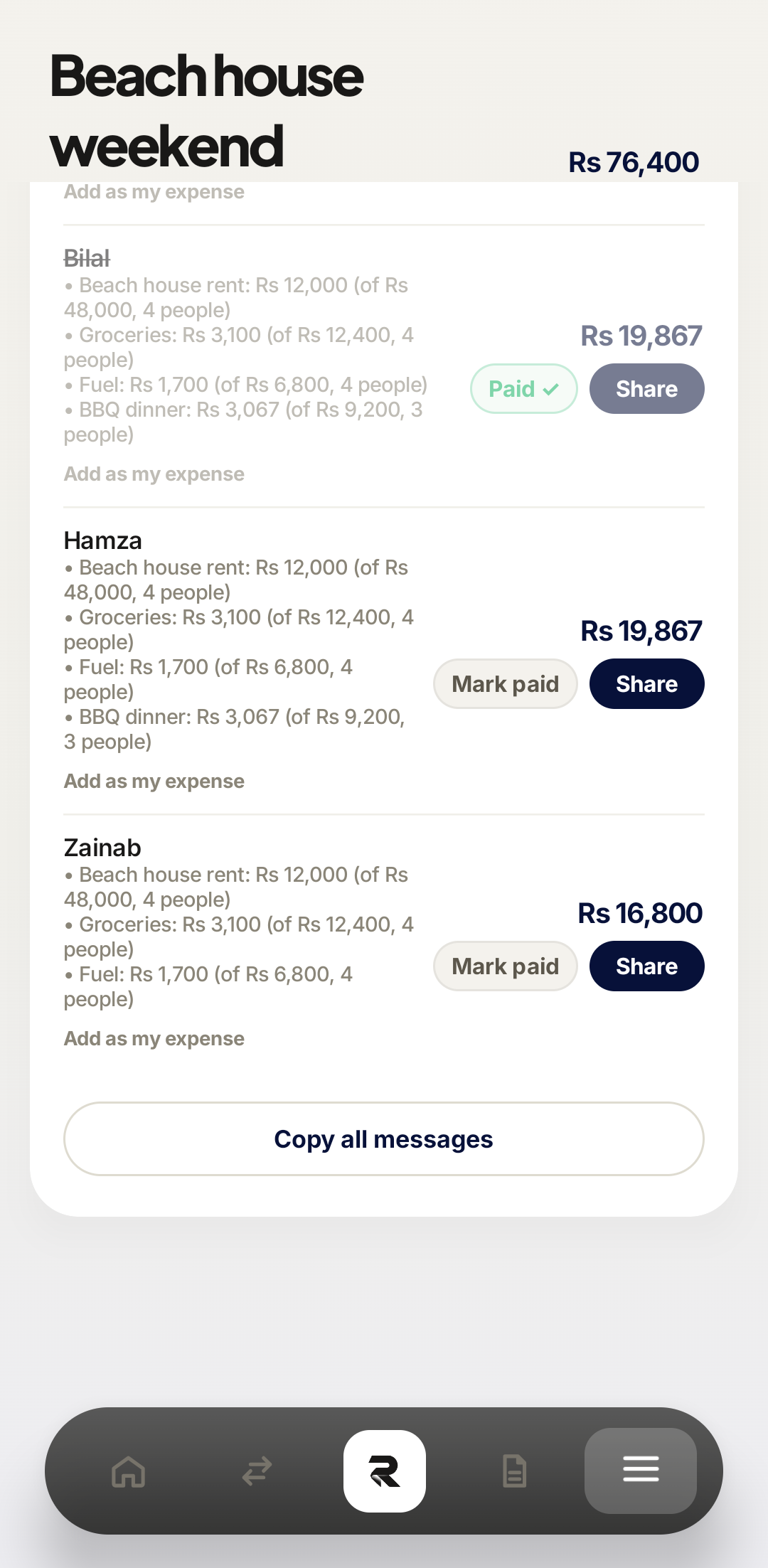
- Send everyone their itemised share on the same day, all at once.
- Set the internal due date a few days before the real one.
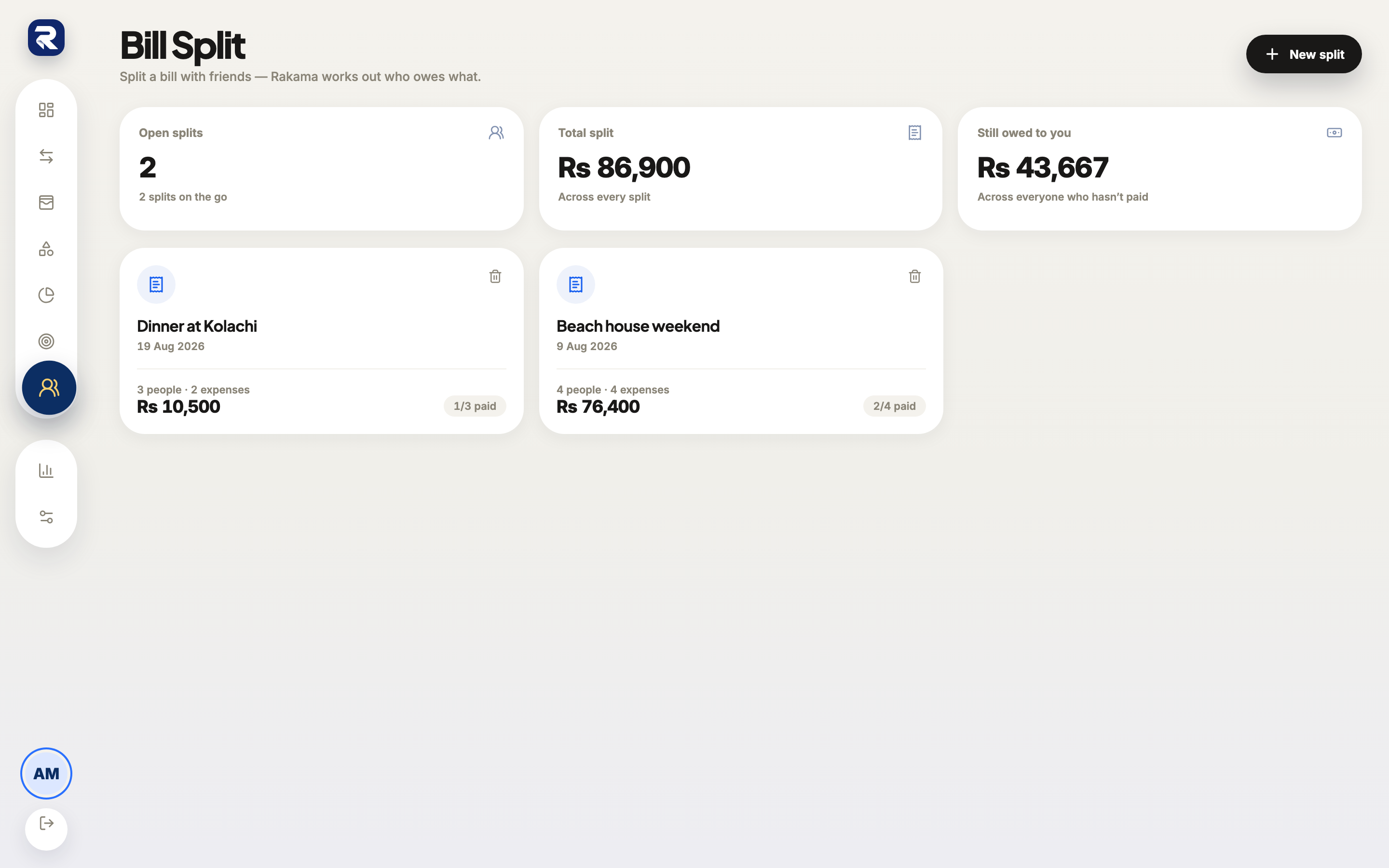
- Mark people paid as they settle, so the outstanding amount is always current.
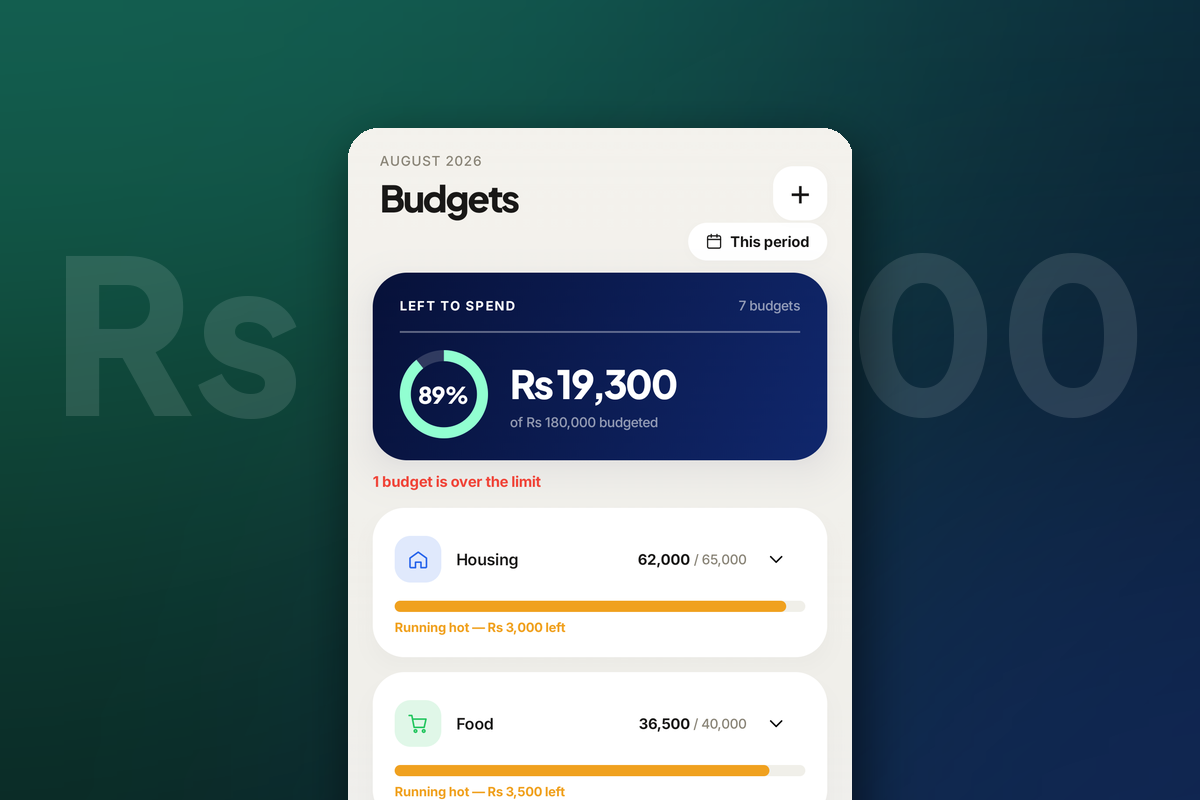
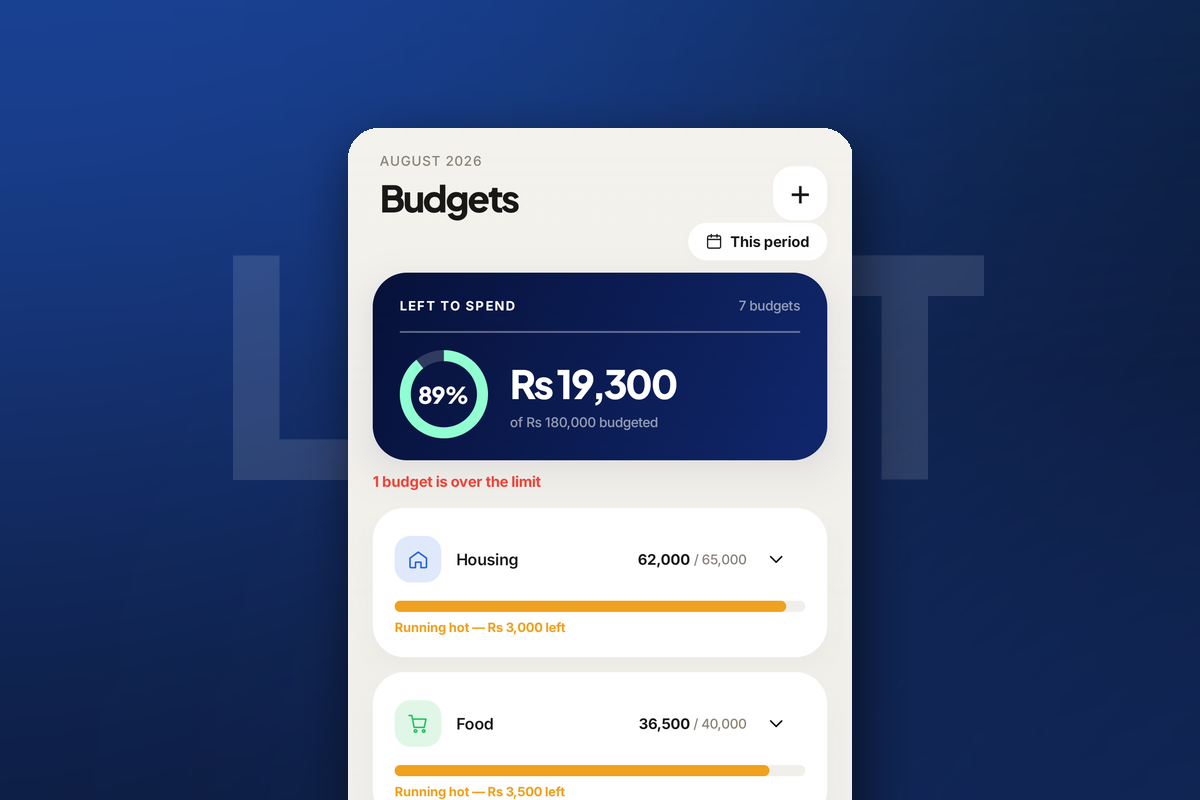
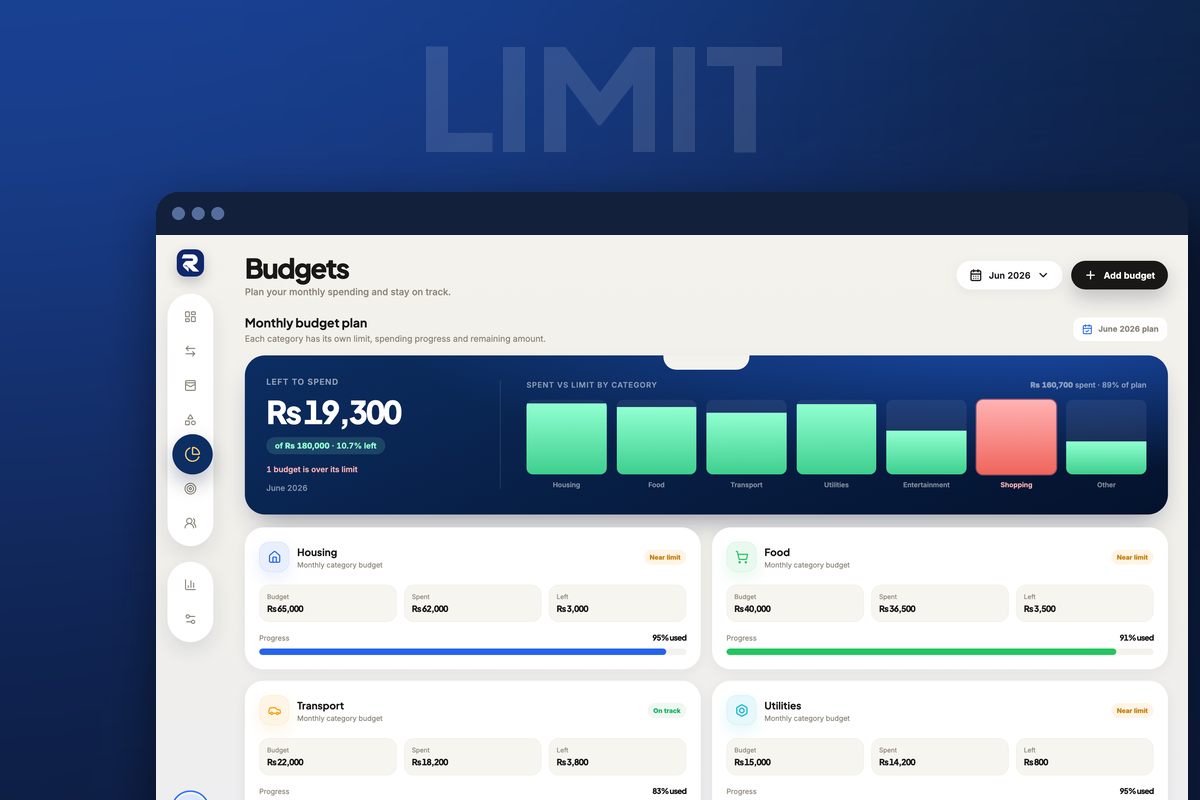
- Record your own share as an expense so your personal budget stays honest.
None of this requires your housemates to use any particular app. You hold the record and send messages through whatever chat you already use — which matters, because a system that depends on five people all installing something is a system that will not survive its second month.
Frequently asked questions
Should roommates split rent equally or by room size?
By room size or amenity when the rooms genuinely differ — a master bedroom with an attached bath is not the same product as a small back room. Equal splits work when the rooms are comparable. Agree the basis in writing before anyone moves in.
How do you split a utility bill when one person uses far more?
Split the base connection equally and the usage by the thing that drives it. For electricity in a shared house that usually means air conditioning: whoever runs a unit in their room carries a larger share of the summer bill.
Who should hold the utility accounts?
One named person per account, ideally spread across housemates so no single person carries every liability. The account holder pays the provider and everyone settles with them.
What if a roommate keeps paying late?
Move the due date earlier than the actual bill date and make the amount visible to everyone at the same time. Most late payment is disorganisation rather than avoidance, and a shared record fixes disorganisation.
Make your money easier to understand.
Track expenses, plan budgets, and keep your goals in one clear view with Rakama.
Try Rakama free ↗