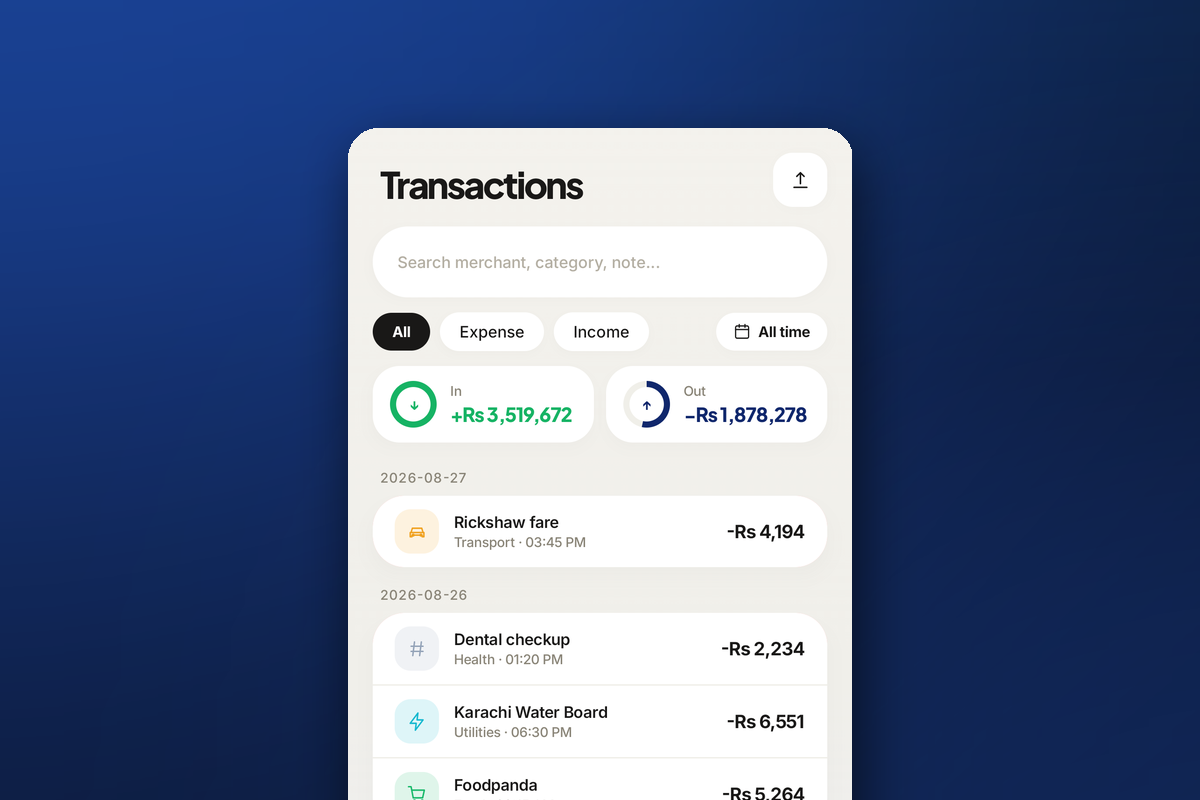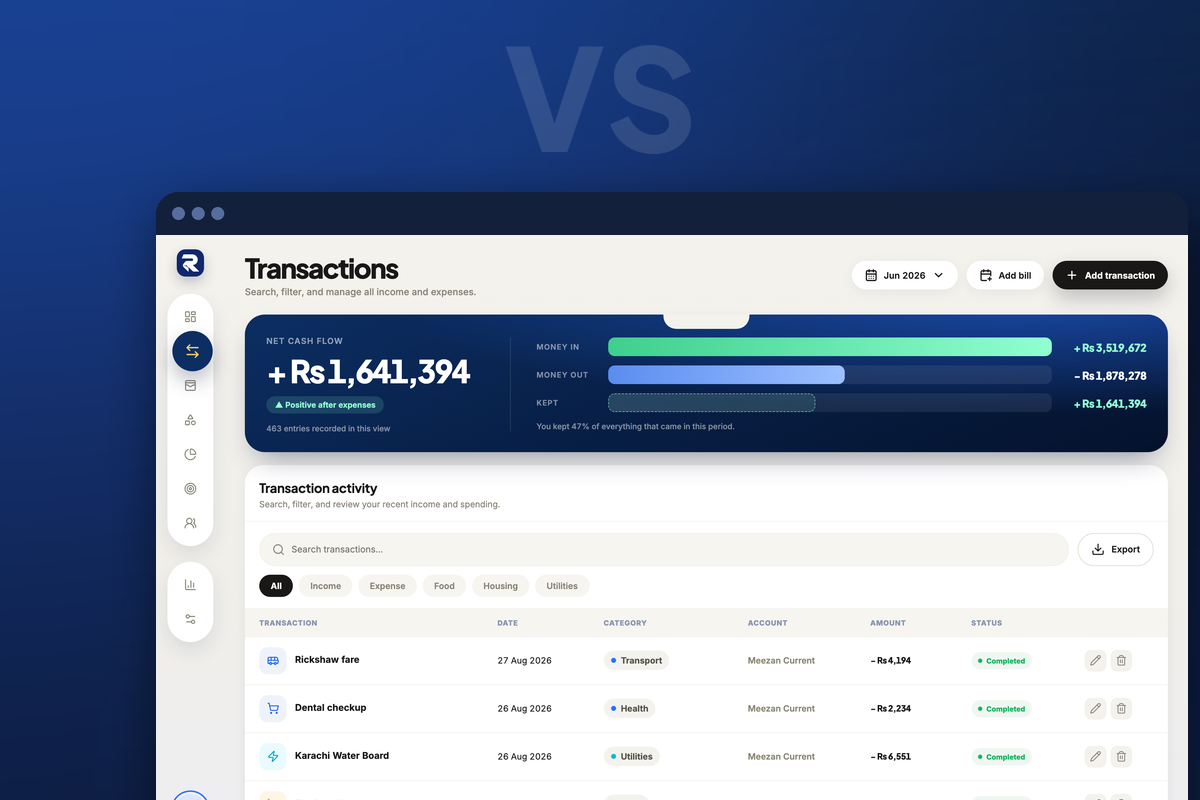
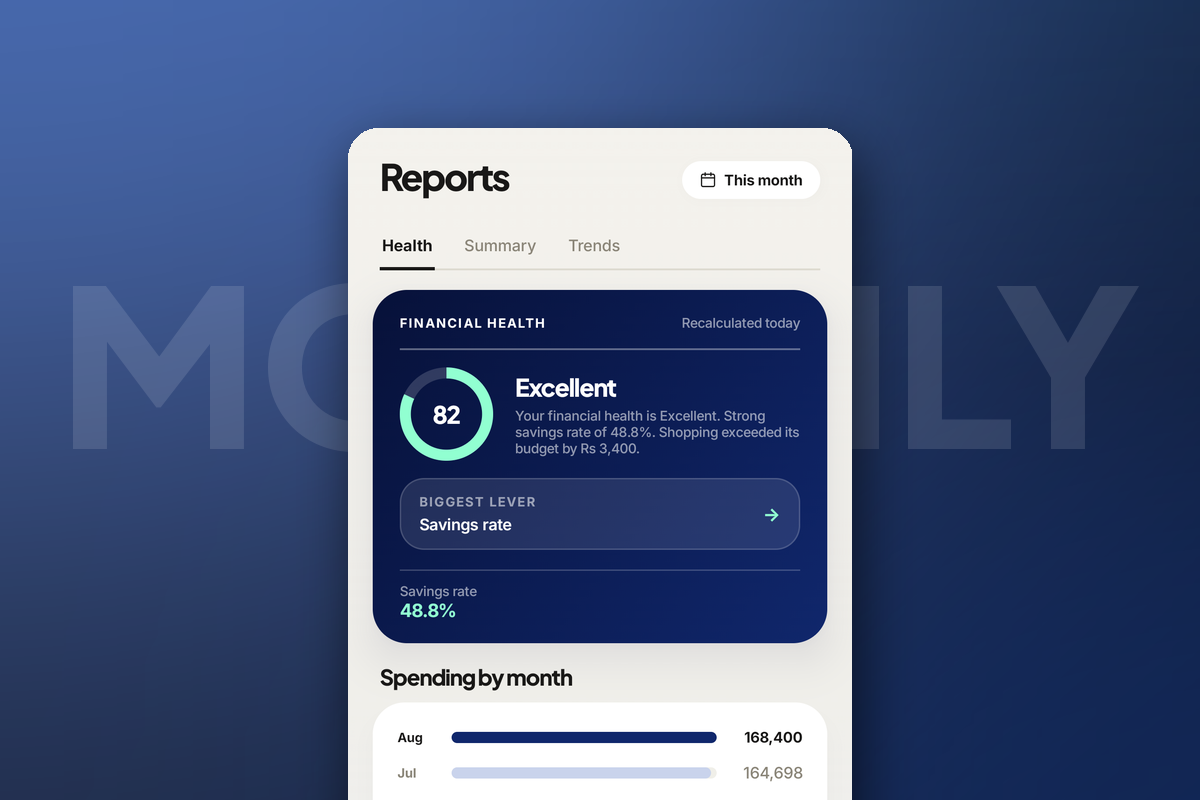
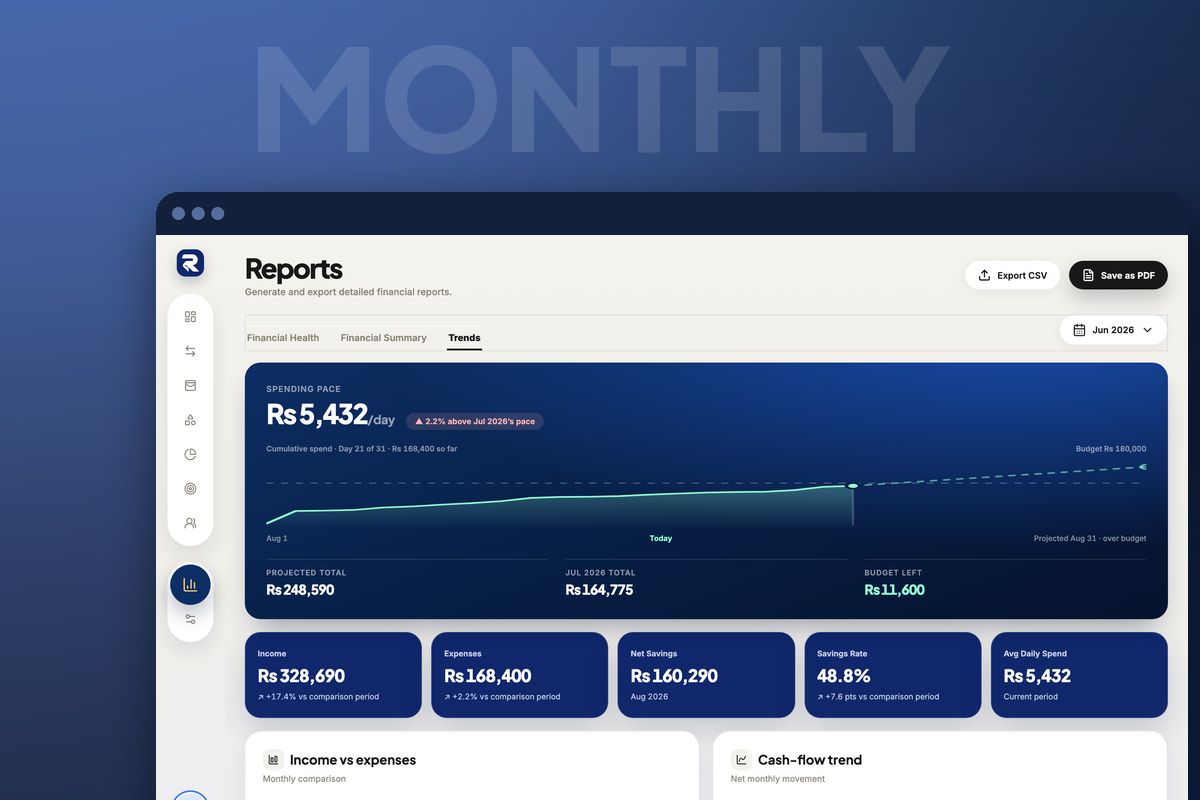
Most people do not overspend because they are careless. They overspend because they cannot clearly see where their money is going. Expense tracking gives you that visibility.
What it means to track expenses
Expense tracking means recording what you spend and organizing it into useful categories such as housing, food, transport, shopping, utilities, and subscriptions. The goal is not to avoid every purchase. It is to understand your patterns.
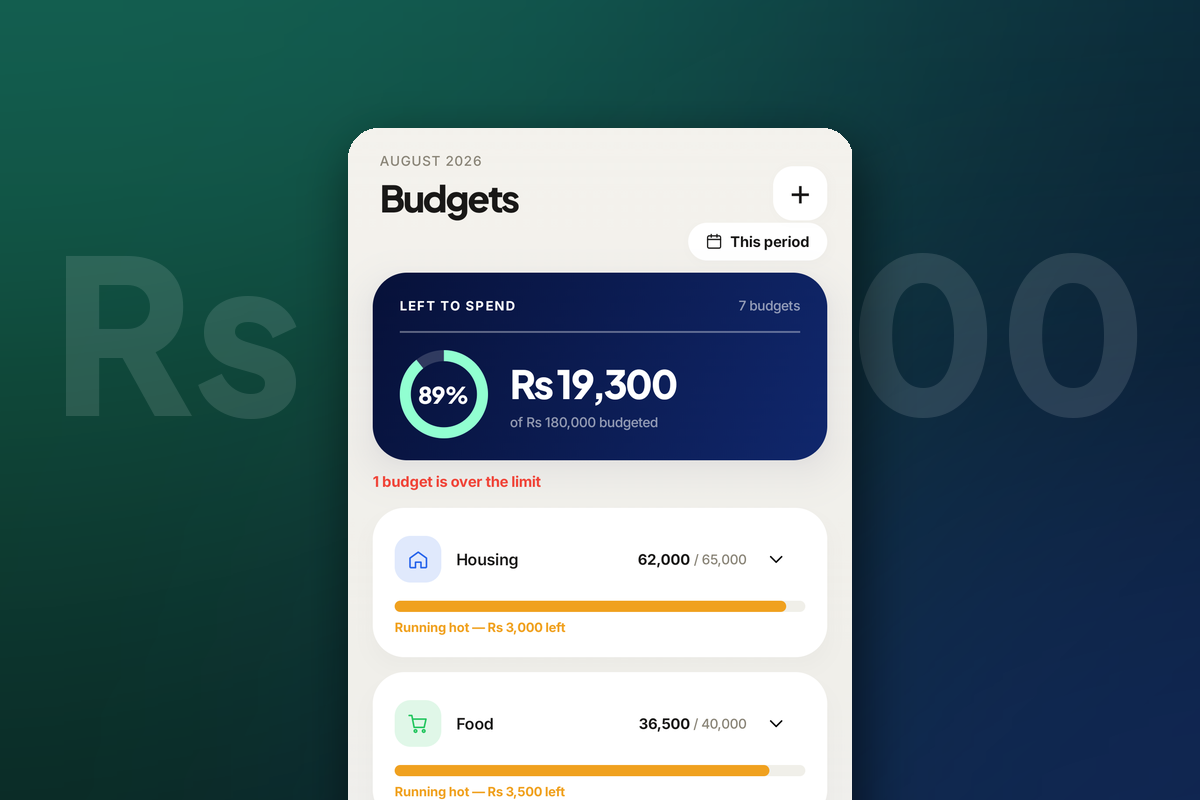
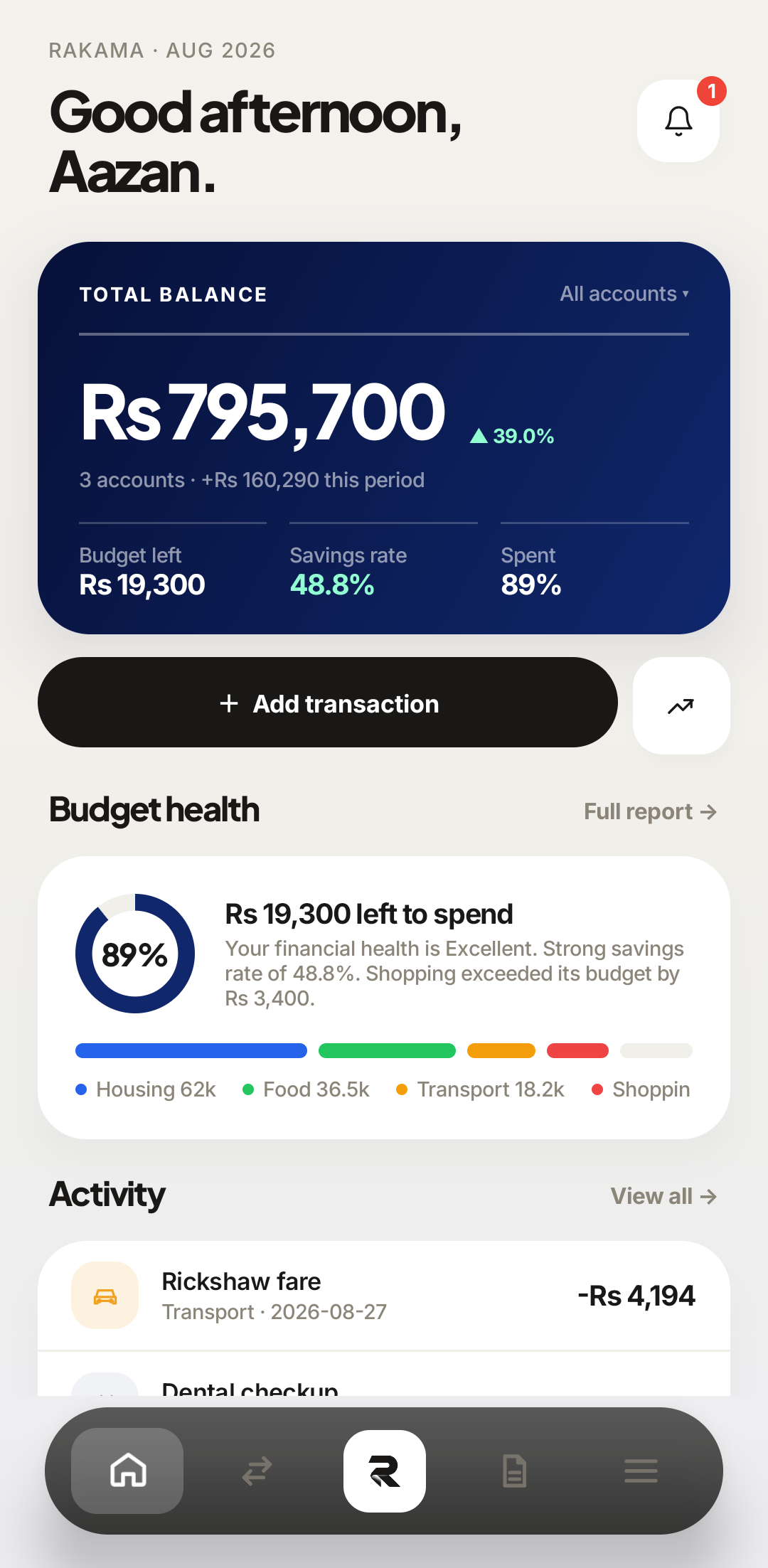 Budget health
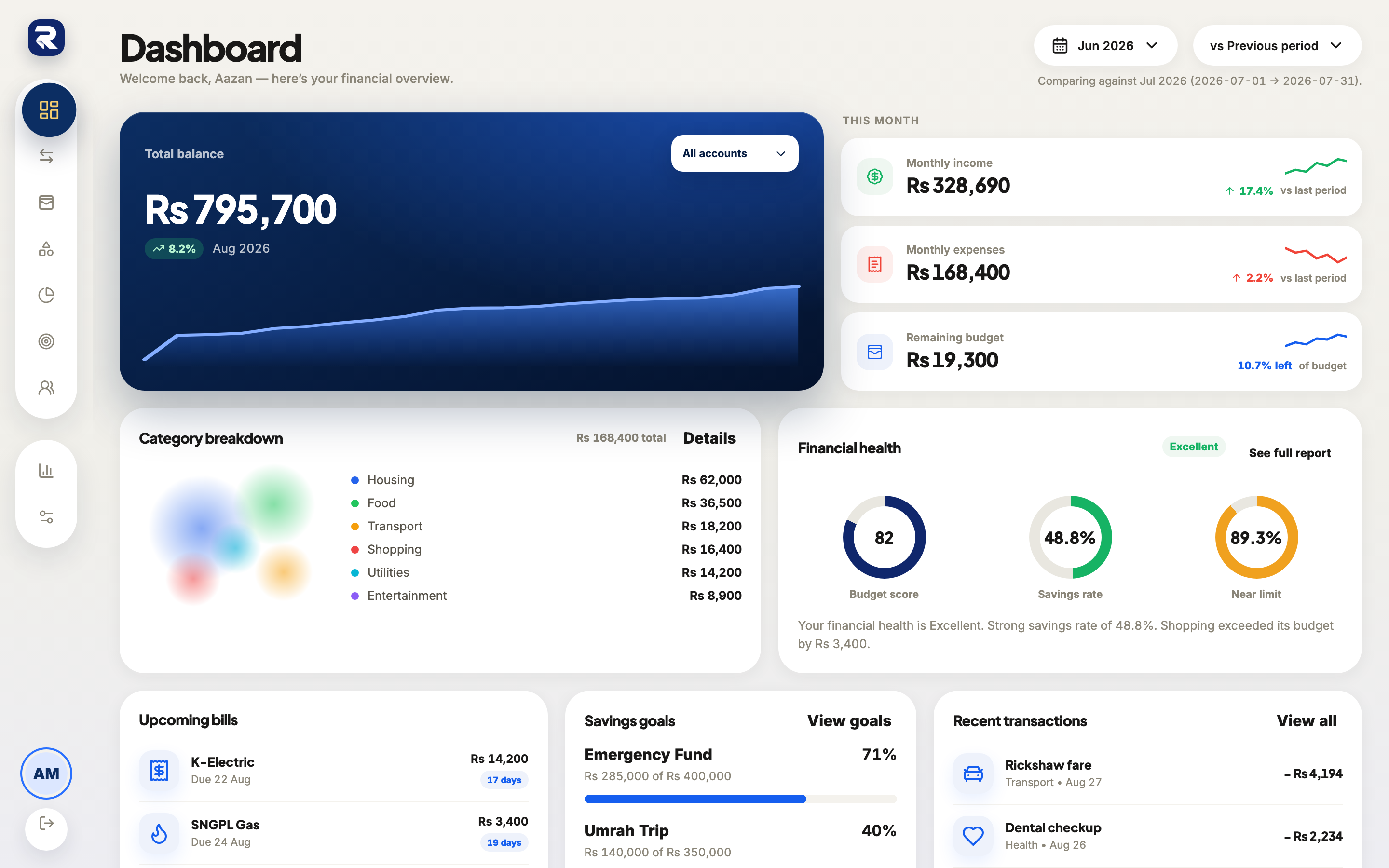 Category breakdown
How to track your monthly expenses
1. Choose a method you will maintain
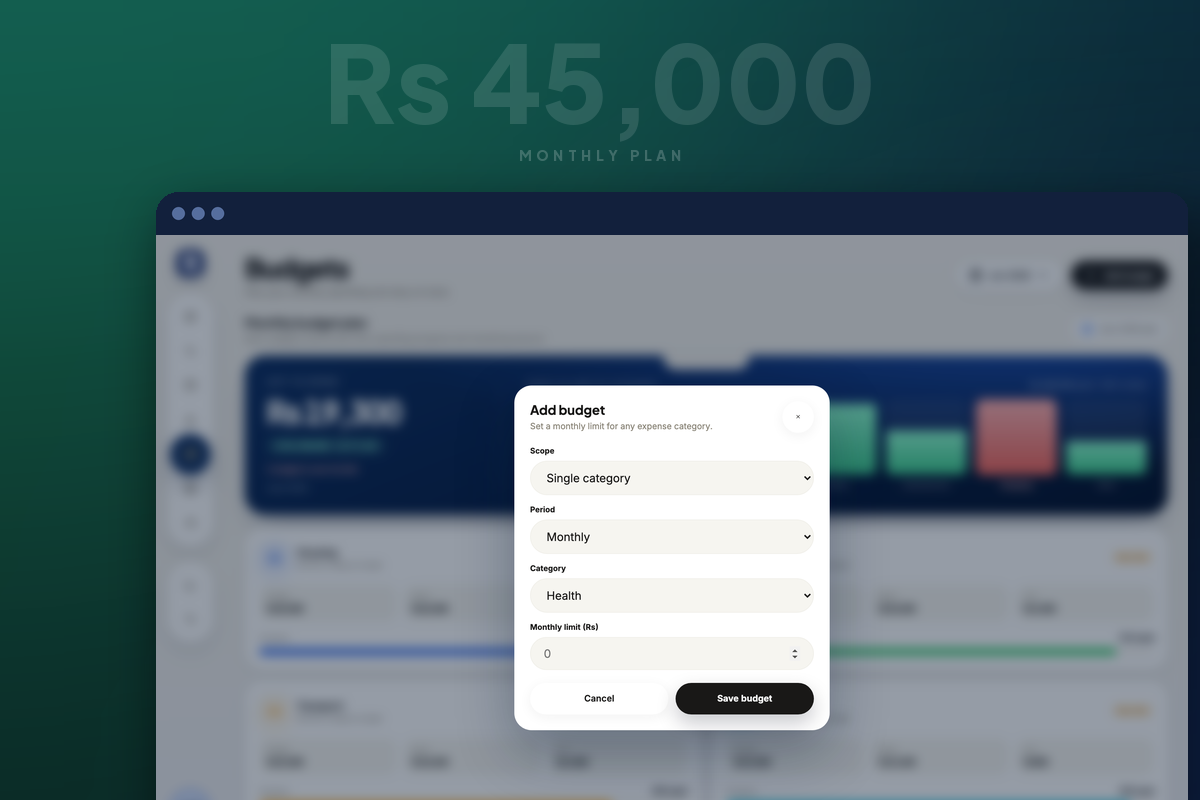
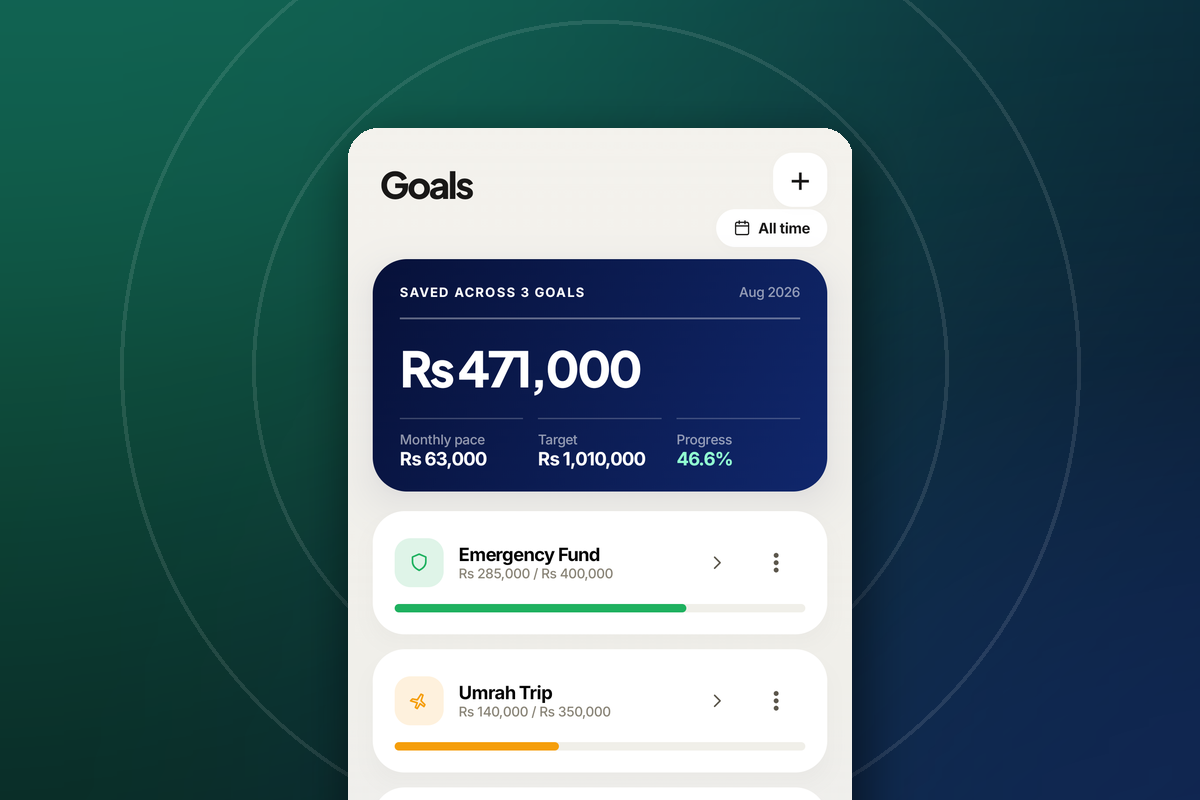
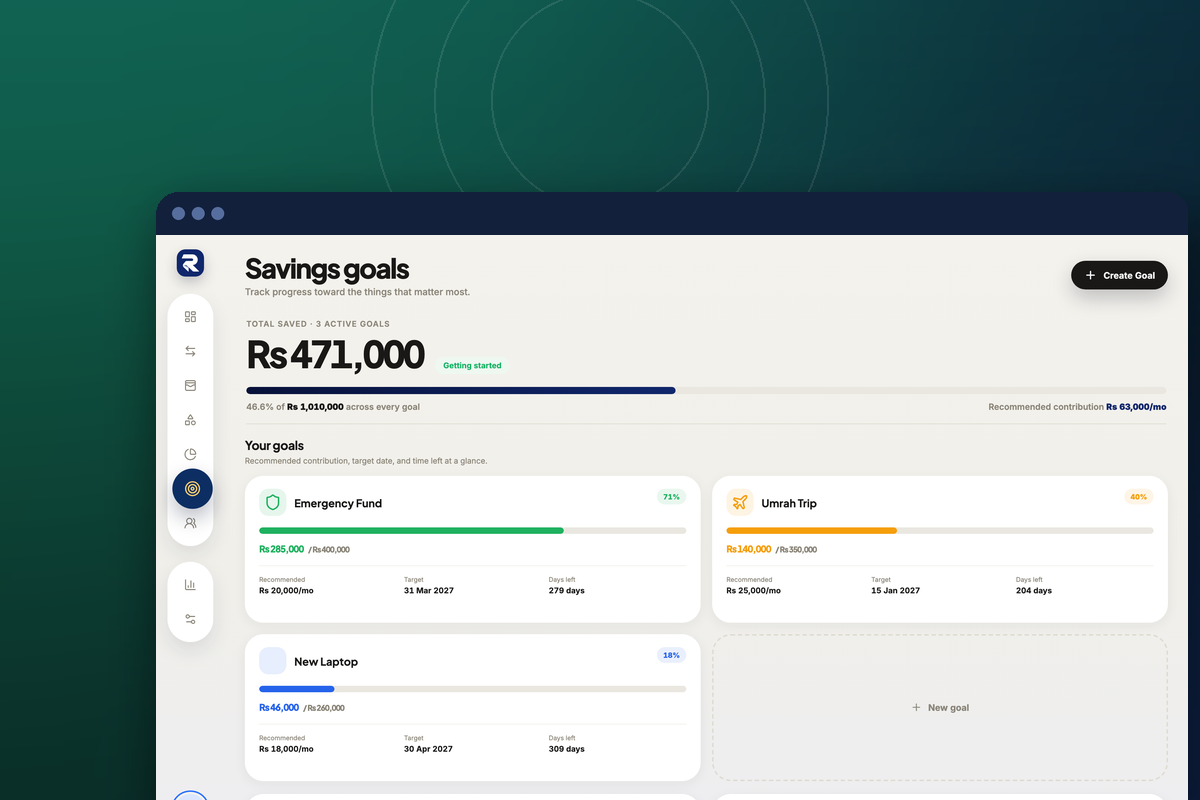
You can use a notebook, spreadsheet, bank app, or a dedicated budgeting app. The best method is the one you will actually update. Rakama combines transaction tracking, category breakdowns, budgets, goals, and analytics in one place.
2. Record every expense
Include large bills and small repeat purchases. A few small purchases each week can reveal a pattern that is invisible when you only look at major expenses.
3. Review your categories weekly
Ask which category is growing fastest, whether any purchase was unexpected, and how much you can safely save. A weekly review gives you time to adjust before the month ends.
Common expense-tracking mistakes
- Only tracking large purchases
- Waiting until the end of the month
- Creating too many categories
- Ignoring annual and irregular expenses
Frequently asked questions
How often should I track expenses?
Daily tracking is ideal, but a weekly review works well if your transactions are recorded consistently.
What is the easiest way to track expenses?
A budgeting app is usually easiest because transactions, categories, budgets, and reports live together.
Make your money easier to understand.
Track expenses, plan budgets, and keep your goals in one clear view with Rakama.
Try Rakama free ↗