
Cash is where personal budgets go to die, and not for the reason people assume. The problem is not that cash is hard to remember. It is that cash is the only kind of money that exists in two places in your ledger at once — as a withdrawal from your bank, and as the purchases you make with it — and almost every attempt to track it ends up counting both.
The double count, precisely
Say you take out Rs 20,000 on Monday and, over the week, spend Rs 4,200 on groceries, Rs 1,800 on transport and Rs 900 on a haircut. Rs 6,900 is gone; Rs 13,100 is still in your wallet.
| What you recorded | What the app reports | What is true |
|---|---|---|
| The withdrawal only | Rs 20,000 spent | Rs 6,900 spent |
| The purchases only | Rs 6,900 spent | Correct — but your bank balance is wrong |
| Both | Rs 26,900 spent | Nearly four times reality |
| Withdrawal as a transfer, plus purchases | Rs 6,900 spent | Correct, and balances agree |
Only the last row gets both halves right, and it is the only one that needs cash to be a place rather than an event.
The setup, which you do once
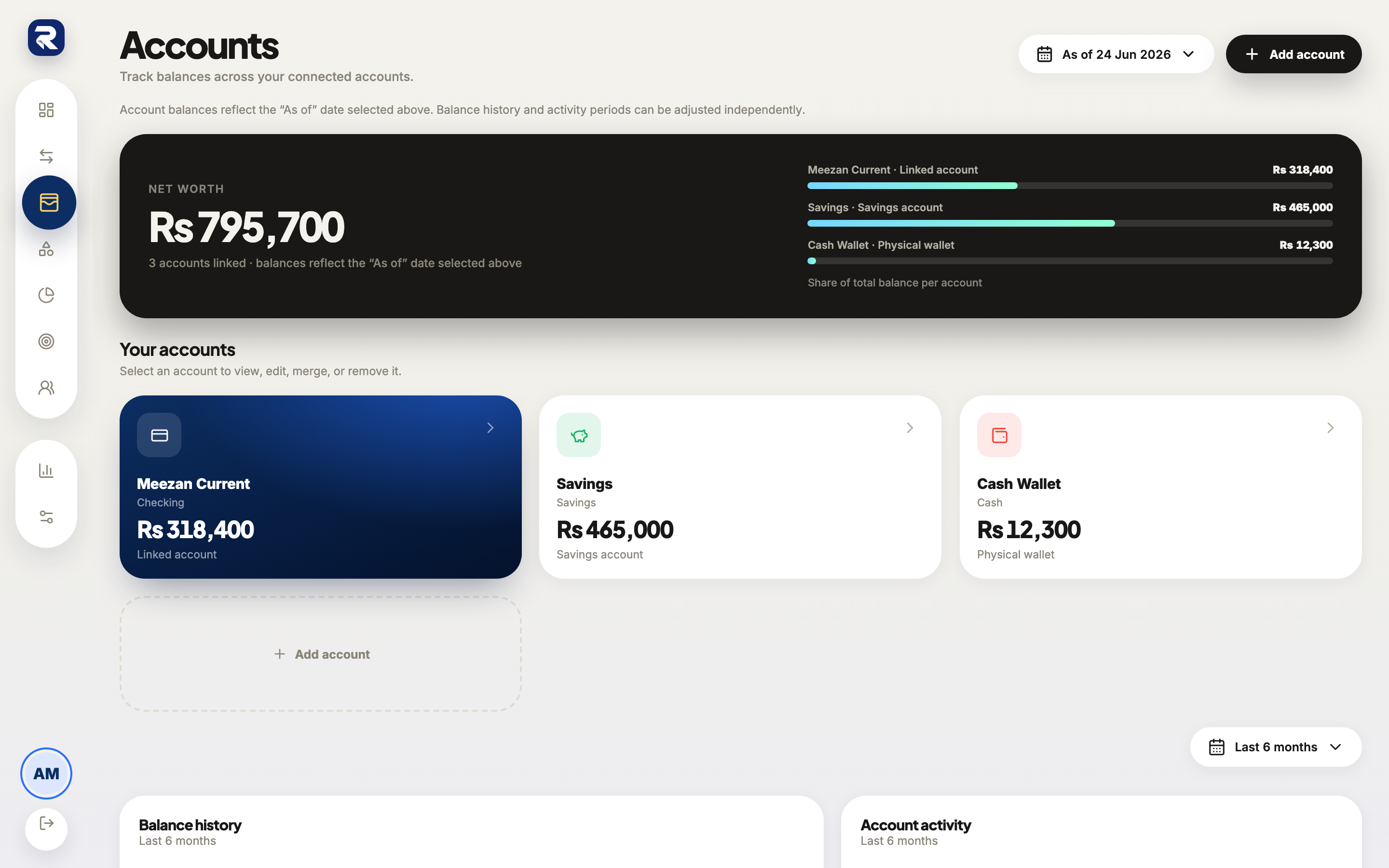
Create a cash account
Not a category — an account, of type Cash, sitting alongside your bank accounts. Its opening balance is whatever is in your wallet right now. Count it; do not estimate, because this is the one number the whole method is anchored to.
Decide your floor
Pick the amount below which you will not bother recording a cash purchase. Rs 100 or Rs 200 is sensible for most people. Write it down somewhere, because the value matters less than never changing it mid-month.
Pick your count day
One day a week, ideally the same one, when you will physically count what is in your wallet. Sunday evening works for most people because nothing is competing for the attention.
The daily habit, which is smaller than you think
There are exactly two things to do, and only one of them is regular.
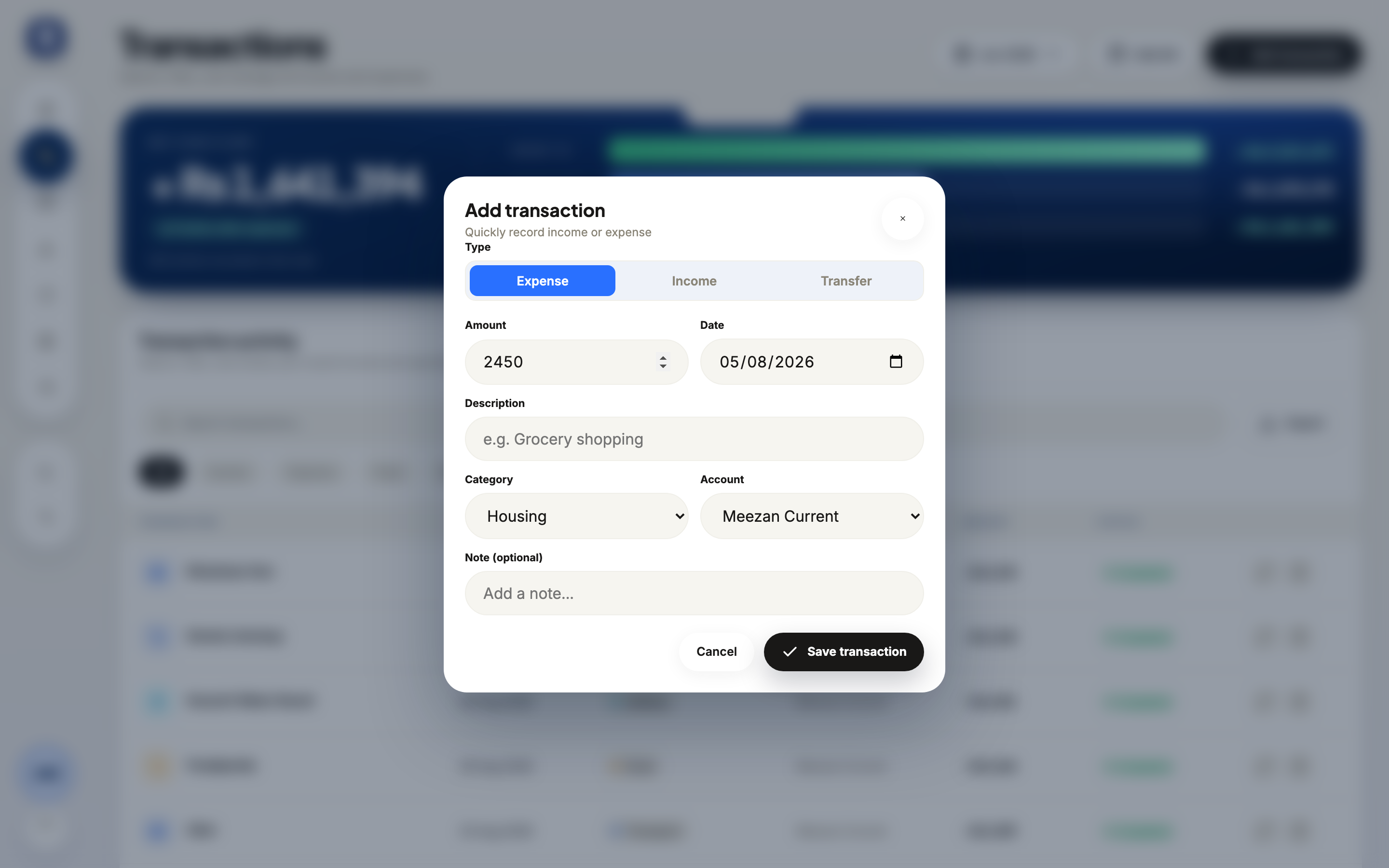
- When you withdraw cash: record a transfer from the bank account to the cash account. If there was a fee, record it as its own small expense — it is the one part that genuinely left you.
- When you spend cash above your floor: record an ordinary expense against the cash account, with a real category.
That is the whole daily practice. Notice what is absent: no reconciling, no receipts, no catching up at month end. The withdrawal is a handful of times a month, and each purchase is a fifteen-second entry made while you are still standing there.
The weekly count, which is the part that saves the method
Every method for tracking cash eventually drifts, because you will buy something for Rs 60 and not record it. The difference between a method that survives and one that gets abandoned is what happens next.
On your count day: open the wallet, count what is there, compare it with what the app says the cash account holds. If the app says Rs 9,400 and you have Rs 8,750, post a single expense of Rs 650 — call it Cash, or Uncategorised, or Small change — and move on.
Do not try to remember what the Rs 650 was. That is the trap. Reconstructing a week of small purchases takes twenty minutes, produces guesses, and is the reason most people do this three times and then stop. One adjustment line takes ten seconds and leaves the account correct going into the next week, which is the only thing that actually matters.
What the gap tells you
The size of the adjustment is itself useful. Under a few hundred rupees is noise. Several thousand, week after week, means there is a real category of spending happening entirely off the books — and it is usually the same thing every time. Watch it for a month and the pattern names itself.
What you are allowed to skip
This is the part most guides leave out, and it is the reason theirs do not survive.
- Anything under your floor. That is what the floor is for.
- Splitting a mixed purchase. Rs 2,000 at a general store that was partly groceries and partly household goods can go entirely in whichever is larger. The precision buys you nothing.
- Same-day accuracy. Recording Thursday’s purchases on Friday morning is fine. Recording them in the wrong month is not.
- The exact time of day. Nothing in any report reads it.
What you are not allowed to skip is narrower than it sounds: the withdrawal must be a transfer, and the weekly count must happen. Everything else can slide for a week and recover. Those two cannot — miss the transfer and your spending is overstated by the full amount; miss the count for a month and the adjustment becomes too large to post without wondering whether the whole account is wrong.
Frequently asked questions
How do I track cash spending?
Give cash its own account, move money into it with a transfer when you withdraw, and post each cash purchase against that account. What is left in the account should match what is in your wallet.
Why is my cash balance always wrong?
Because small purchases go unrecorded, which is normal. Count the wallet once a week and post the difference as a single adjustment rather than trying to reconstruct what was missed.
Do I have to record every small cash purchase?
No. Pick a floor — Rs 200 is a reasonable one — record everything above it, and let the weekly count absorb the rest. A method you keep beats a method that is complete.
What if I withdraw cash and spend it the same day?
Still record the withdrawal as a transfer and the purchase as an expense. The wallet balance goes up and straight back down, which is exactly what happened.
Should the ATM fee go in the transfer?
No — record it separately as an expense. Inside the transfer it becomes invisible, because transfers are excluded from every spending figure.
Make your money easier to understand.
Track expenses, plan budgets, and keep your goals in one clear view with Rakama.
Try Rakama free ↗