
Two months’ rent handed to a landlord on the day you get the keys. Three years later you move out, and Rs 60,000 of the Rs 150,000 comes back — the rest absorbed by a repainting charge and a disagreement about a cupboard door. Which month did you spend Rs 90,000?
The short answer
On the day you pay it, a refundable deposit is not an expense. Your cash went down and an asset appeared — a claim on the landlord, the utility, the employer — of exactly the same size.
It becomes an expense later, and only for the part that does not come back. That transition is the whole subject of this post, because it is where every method breaks.
The asset that quietly decays
A deposit is unusual among the cases in this series because the correct classification is a function of time, and you cannot know it at the moment of entry.
On day one it is fully an asset. By year three you know, in the honest part of your head, that some fraction is not coming back — deductions for wear, a dispute, or simply a landlord who does not return deposits. But nothing has happened to record. Nobody sends you a statement adjusting it downwards. The asset sits in your ledger at its original value until the day it resolves, at which point three years of gradual reality arrive as a single lump.
How to record one
If you genuinely expect it back
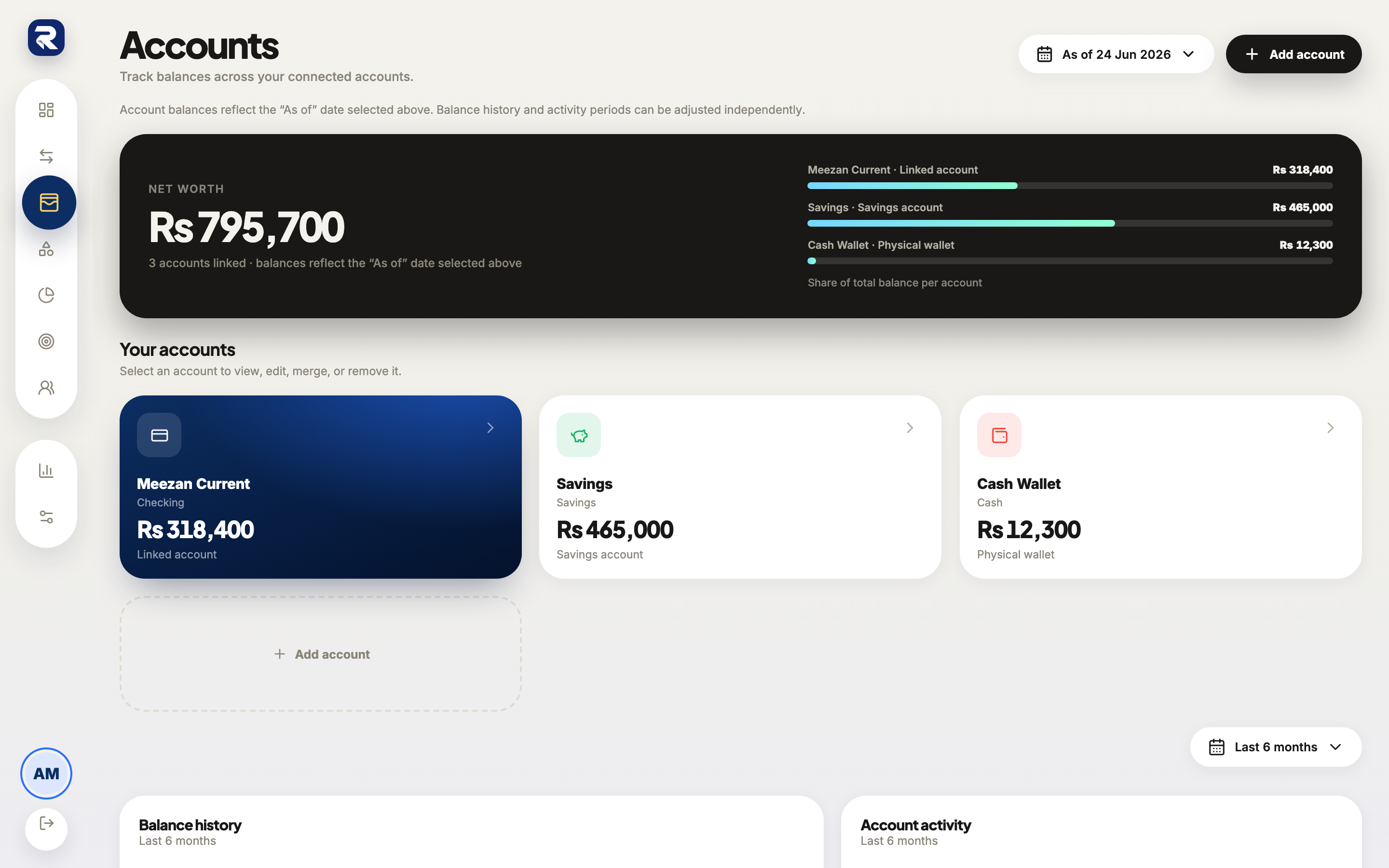
- Create an account named for the deposit — "Flat deposit", "Utility deposit". Type it Savings; it is money you own that you cannot spend.
- Paying the deposit is a transfer from your current account into it.
- It sits there, untouched, for as long as the arrangement lasts.
- When it resolves: transfer back what you actually received, and record whatever is missing as an expense in the month it became clear.
If you do not
Record it as an expense on day one and be done. This is not laziness; for a great many rental deposits it is the more accurate entry, and it has the pleasant property that any money returned later arrives as an unambiguous windfall rather than as the partial failure of an expectation.
Choose between the two methods on the day you pay, based on what you actually believe, not on what the contract says. The contract is not the thing that determines whether the money comes back.
Three things that look like deposits and are not
A booking deposit
Half the fee to a photographer, a hall, a contractor. It is not refundable in any meaningful sense — it is the first instalment of a purchase. Record it as spending, in the category the whole purchase belongs to, on the day you pay it.
A pre-authorisation hold
A hotel or a rental company blocking Rs 30,000 on your card. No money has moved. Record nothing at all; if it appears in an imported statement, delete the line rather than categorising it. Recording and then reversing it makes two false entries where zero were needed.
A returnable-container charge
The rupees on a gas cylinder or a water bottle. Technically a deposit, practically a rounding error, and not worth an account. Expense it and move on — the point of a method is to be applied, and one that demands an account for Rs 300 will not be.
Frequently asked questions
Is a security deposit an expense?
Not when you pay it — you still own the money. It becomes an expense to the extent it is not returned, and that is usually years later.
How do I record a rental security deposit?
As a transfer into an account representing the deposit. When you move out, transfer back what you receive and record the rest as an expense.
What if I never expect to see the deposit again?
Then record it as spending on the day you pay it. A ledger holding an asset you privately believe is gone is worse than one that never claimed it.
Is a booking deposit the same thing?
Usually not. A deposit that is part-payment for something you are going to receive is spending in advance, not a refundable asset.
Make your money easier to understand.
Track expenses, plan budgets, and keep your goals in one clear view with Rakama.
Try Rakama free ↗